


Ensuring both performance and safety in these systems requires a comprehensive approach, combining reliable equipment design with advanced explosion protection solutions.
Managing Explosion Risk in Bucket Elevators
Handling powdered and granular materials inherently generates dust, which can accumulate inside enclosed equipment such as bucket elevators. Under certain conditions, this creates a potentially explosive atmosphere.
The main risk factors typically include:
- Dust accumulation inside of equipment
- Potential ignition sources such as misalignment, overheating, or material blockage
- Risk of explosion propagation to connected equipment (ducts, filters, conveyors)
While standard monitoring systems help detect anomalies, they are often not sufficient on their own to fully secure installations in increasingly demanding regulatory environments.
Reducing Ignition Risks Through Reliable Components
The first level of protection consists in minimizing ignition sources through high-performance conveying components.
STIF provides solutions specifically designed for bucket elevators:
- JET – Steel and plastic elevator buckets, including anti-static model manufactured from PA66 polyamide, specifically designed for operation in ATEX Zone 20 dust atmospheres
- BELTJET – Elevator belts, including VLE belts, ensuring minimal elongation and reducing the risk of slippage on pulleys, thereby increasing operational safety
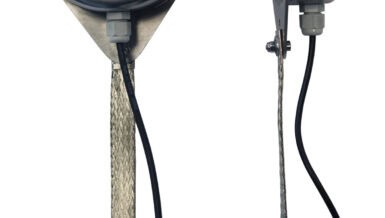
- SENSORJET – Safety devices, continuously monitoring:
- Belt misalignment
- Underspeed
- Material blockage
- Overheating at pulley levels
These measures enabled early detection of abnormal conditions and significantly reduced the likelihood of ignition sources.
Limiting Explosion Effects with Passive Protection
Despite preventive measures, explosion risks cannot be completely eliminated. Atex certified passive protection systems are therefore essential to limit their impact.
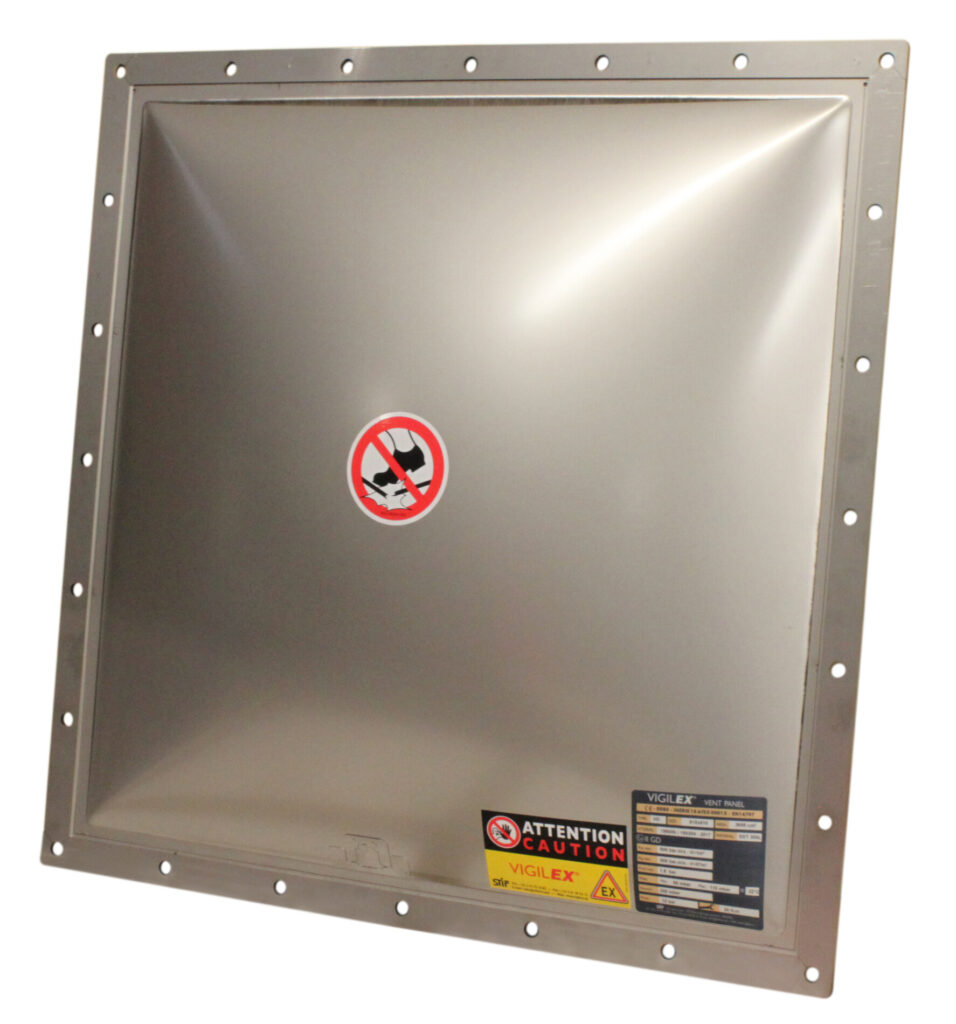
- VIGILEX explosion panels allow controlled venting of explosion discharge, protecting equipment integrity
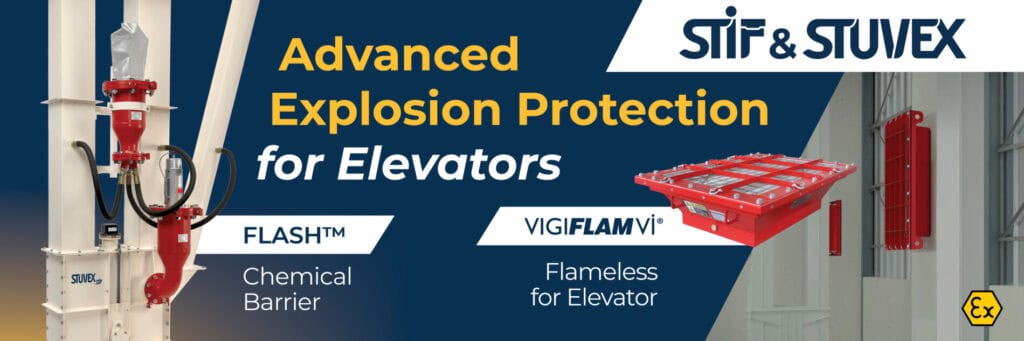
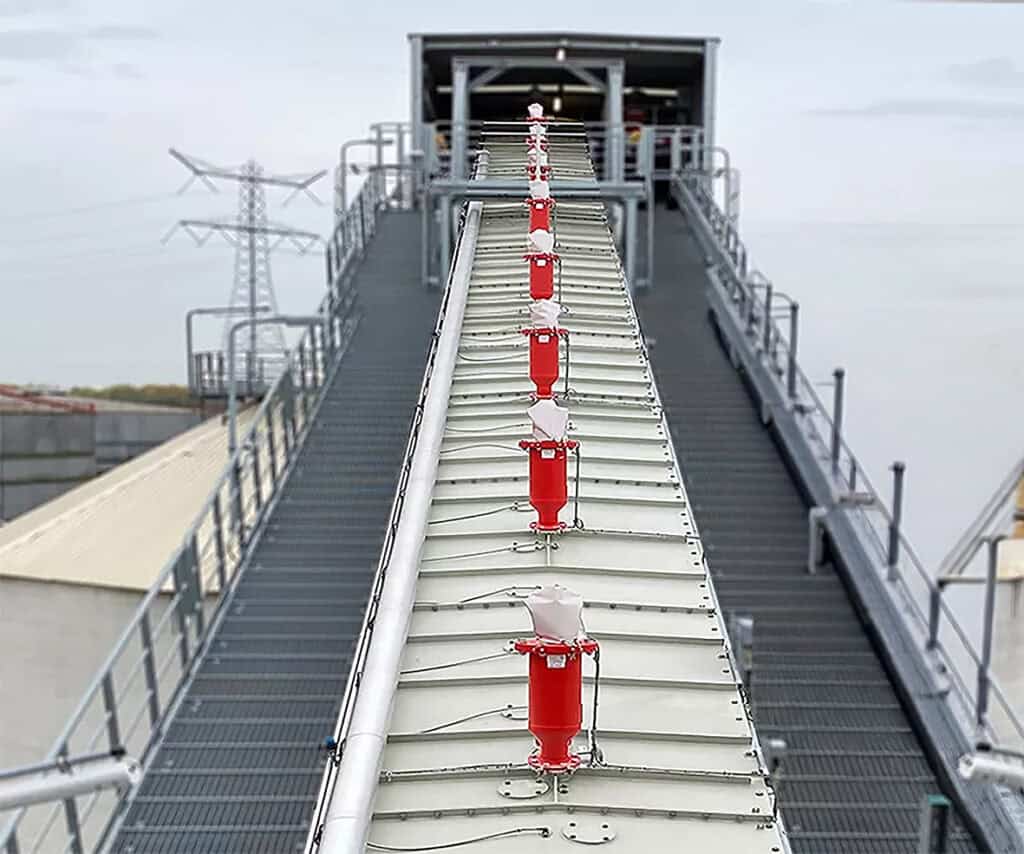
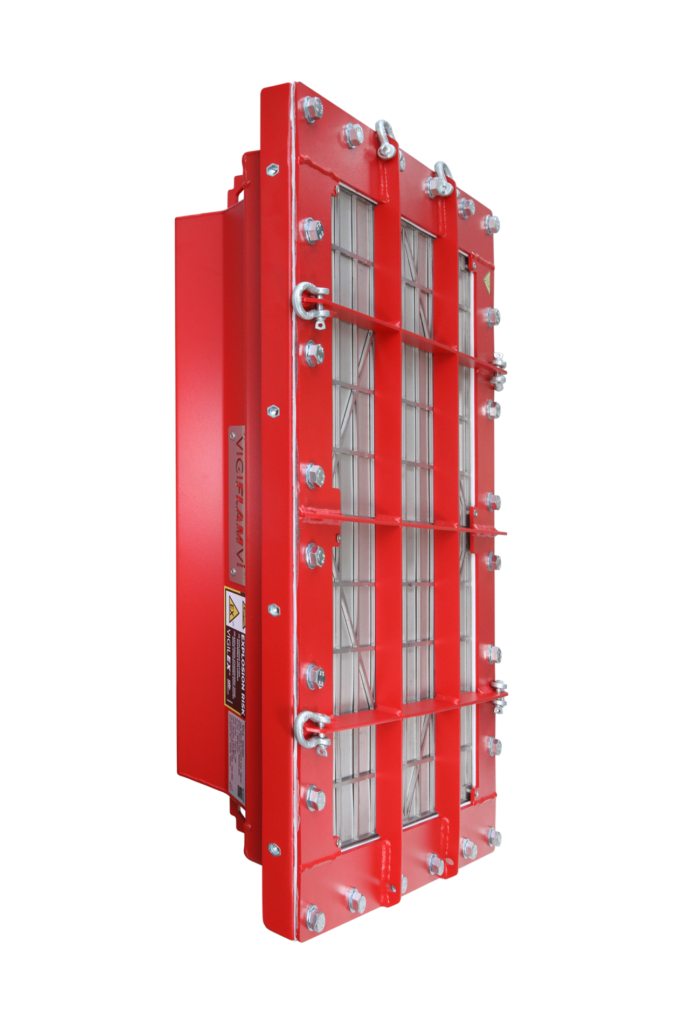
- VQ, flameless device, and VIGIFLAM VI, compact flameless venting device specifically designed for elevators, enable safe indoor pressure release while preventing flame propagation
These systems play a key role in reducing damage to installations and ensuring the safety of surrounding areas. However, they operate once the explosion has already begun.
Suppressing the Explosion at an Early Stage
To further strengthen safety, active explosion protection systems can be implemented to stop an explosion before it fully develops.
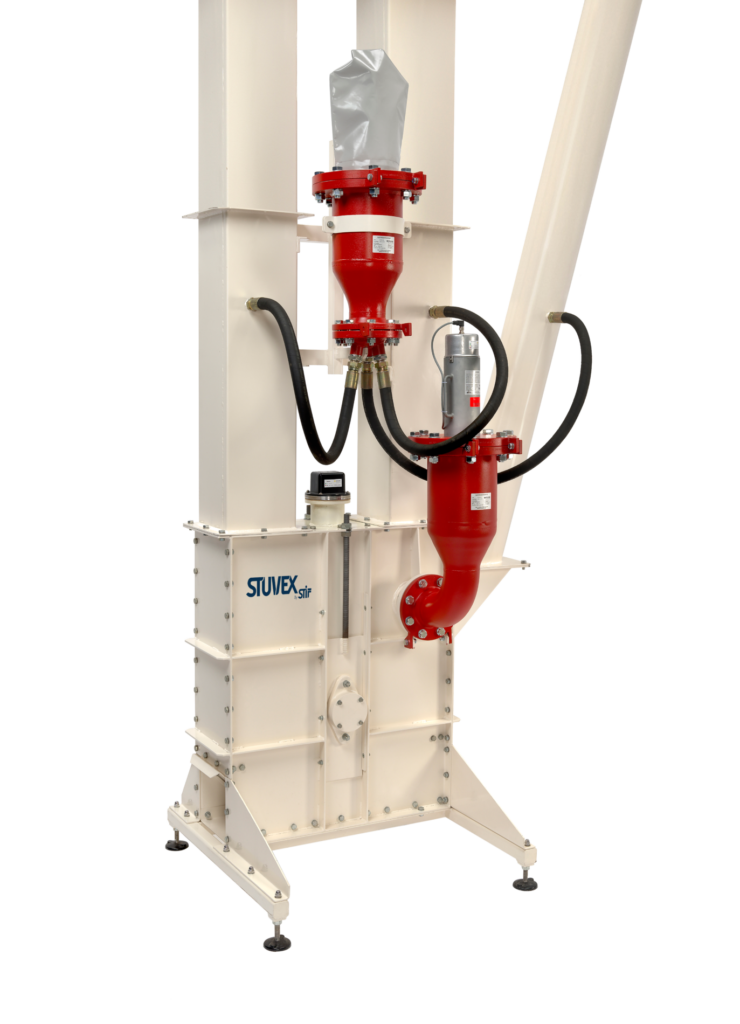
The STUVEX Flash Suppression System and Chemical Barrier, ATEX certified, is based on a principle:
- Ultra-fast detection of the earliest explosion indicators using pressure and/or flame detectors
- Reaction within milliseconds, triggering gas generators
- Discharge of a suppressant agent, creating a chemical barrier inside the equipment (bucket elevator, duct, or silo)
This barrier effectively stops the flame and prevents explosion propagation at a very early stage.
Thanks to its compact and robust design, the system can be integrated into existing installations with minimal modifications, making it suitable for a wide range of industrial environments.
A Scalable Approach for Bulk Handling Industries
This integrated protection strategy can be applied across multiple industries handling combustible dust, including:
- Grain and milling
- Food and feed processing
- Chemicals and minerals
- Recycling and biomass
Toward Integrated Safety in Mechanical Conveying
Explosion protection in mechanical conveying systems is evolving toward a more comprehensive and integrated approach.
By combining preventive measures with both passive and active protection systems, industrial operators can significantly enhance safety, protect critical assets, and ensure production continuity.
In today’s industrial environment, integrating these solutions is no longer just an option, it is becoming a necessity.