


Even with best-in-class mixers, optimised pneumatic conveying systems and advanced automation, many plants still experience quality drift, unstable conveying, dust issues or unexpected stoppages. In most cases, the root cause lies further upstream: an unstable material flow entering the process.
For this reason, feeding is far more than a minor mechanical component. It represents the first quality checkpoint and the first control loop in the entire bulk handling process. It is also the stage where materials stop behaving like controlled laboratory samples and begin to behave like real production materials – influenced by variable moisture, particle size distribution changes, compaction in storage, aeration effects, electrostatics, segregation and irregular refill patterns.
WAMGROUP approaches feeding from a clearly process-driven perspective: stabilising the material stream at the earliest stage so that downstream operations become easier to control. When feeding is stable, recipes, pneumatic conveying performance and final product consistency all benefit.
This principle applies across the wide range of industries served by WAMGROUP in bulk solids handling and processing, including feed and food, building and construction, plastics, heavy industries, renewable energy and environmental technology.
This article explores three key feeder lines that play a central role in modern bulk operations:
- Screw feeders – including reference models TXF and ES
- Micro-batch feeders – including reference models MBF and MBH
- Rotary feeders (rotary valves) – including reference models RVR and RVS
Rather than presenting catalogue-style specifications, the focus here is on what matters most to plant engineers and operators: practical application strengths, typical operating contexts and selection logic that reduces process disturbances.
Why feeders determine process stability
Bulk solids rarely flow simply because a plant requires them to. They flow reliably only when material behaviour, hopper geometry, feeder design and operating conditions work together.
- When this balance is missing, plants typically experience a familiar set of disturbances:
- fluctuating dosing and recipe drift
- unstable pneumatic conveying, including surging and uneven line loading
- dust leakage and challenging housekeeping conditions
- frequent manual intervention at hoppers or transfer points
- inconsistent throughput that forces downstream equipment to compensate
A well-designed feeder transforms a variable bulk material into a stable and repeatable process input.
Screw feeders: controlled extraction and reliable metering
Among the most established solutions in bulk solids handling, screw feeders remain a cornerstone of industrial processing.
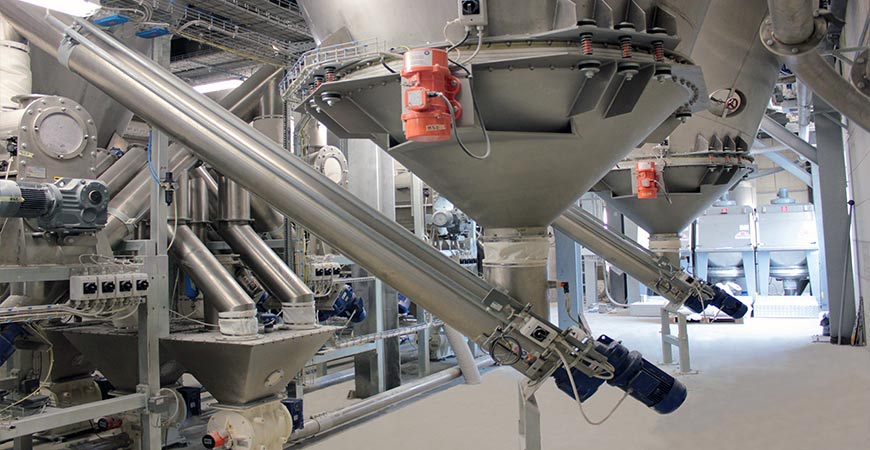
Their strength lies in combining extraction, metering and transfer within a single compact and robust system. Beyond simply moving material, screw feeders impose a controlled and predictable rhythm on powders and granules that might otherwise bridge, compact, segregate or aerate.
What screw feeders do best
Screw feeders are widely used to:
- provide controlled extraction from bins, silos and hoppers
- deliver stable feed to mixers, conveyors and pneumatic conveying systems
- handle a broad range of powdery or granular materials
- offer a robust and maintainable solution for continuous or batch processes
TXF: Stainless steel tubular screw conveyors and feeders for hygienic applications
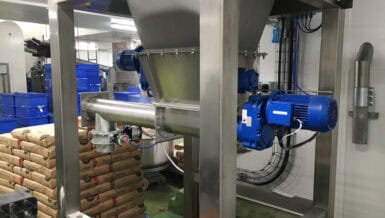
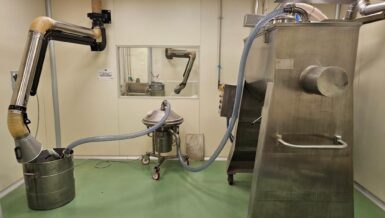
Within the WAMGROUP portfolio, TXF tubular screw conveyors and feeders are designed for processes where material is handled. TXF is the equipment solution when operators need clean, controlled and repeatable conveying/feeding, with a strong focus on hygiene, product integrity and easy line management – especially in environments where cross-contamination, dust dispersion and residue build-up cannot be tolerated.
From an operational perspective, TXF units provide several distinctive benefits:
- Hygienic handling by design, helping keep product purity under control and reducing contamination risks
- Low-residue conveying and feeding, supporting faster changeovers and more consistent results batch after batch
- Cleaner transfer points, thanks to an enclosed concept that helps limit dust spread in the production area
- Operational simplicity, enabling quicker checks and smoother daily routines for maintenance and cleaning
- Proven versatility across industries, from food and animal feed to chemicals, plastics and environmental applications – wherever cleanliness and controlled feeding are priorities
Typical applications include ingredient feeding into mixing and batching, internal product convey between process steps, and hygienic feeding/handling in food, animal feed and adjacent processing industries, where stability and cleanliness directly influence quality and uptime.
Cement screw feeders ES
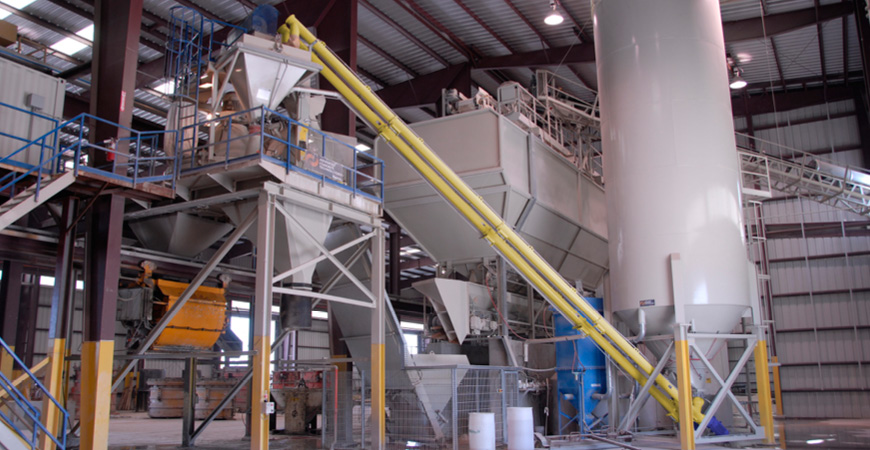
In building and construction applications, feeders often operate under demanding conditions. Cementitious materials and filler dust can be abrasive, compacting and processed in high-duty cycles.
The ES cement screw feeders from WAMGROUP are specifically associated with these environments, supporting feeding and conveying of cement and filler dust in concrete batching plants, asphalt mixing plants and similar industrial applications.
Key operational benefits include:
- design adapted to cement and abrasive materials
- consistent extraction that supports batching accuracy
- a reliable and pragmatic solution for high-duty plant environments
Across industries such as feed and food processing, plastics production, heavy industries and renewable energy operations, screw feeders continue to act as a reliable workhorse between storage and process stages.
Micro-batch feeders: precision where small quantities matter most
In many modern production processes, the most critical ingredients are also the smallest.
Additives, pigments, micro-ingredients, admixtures and functional powders often represent a small proportion of the total recipe but a major influence on final product quality.
When dosing of these materials is inconsistent, the result may be scrap, rework, customer complaints or costly over-formulation.
Micro-batch feeders address this challenge by providing accurate, repeatable feeding of small quantities suitable for automated processes.
Key advantages of micro-batch feeders
Micro-batch feeders are designed to:
- feed small quantities of powders and granules with high repeatability
- stabilise dosing cycles where manual handling introduces variability
- support batch or continuous processing environments
- reduce dust exposure and improve operator ergonomics
Micro-batch feeders with agitator MBF
The micro-batch feeders MBF from WAMGROUP are designed for difficult materials, particularly powders or granules that tend to clog or flow poorly.
Their agitation system supports consistent material discharge, improving dosing stability in many industries including food processing, building materials, plastics, chemicals, packaging and environmental technology.
Key operational advantages include:
- improved performance with challenging or poorly flowing materials
- enhanced cycle repeatability
- a scalable step toward automated recipe management
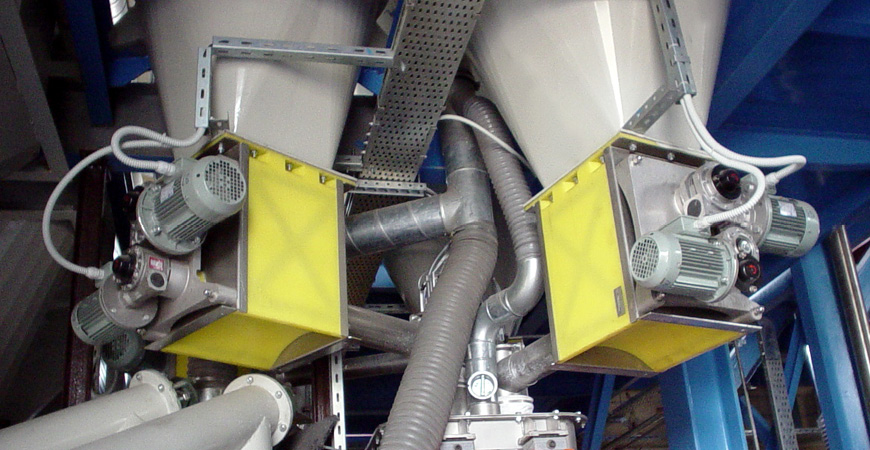
High-efficiency micro-batch feeders MBH
The MBH micro-batch feeder provides continuous volumetric feeding of powdery or granular materials with a design optimised for efficiency and versatility.
MBH feeders are widely applicable across sectors such as food, glass production, plastics, chemicals and construction materials.
Their strengths include:
- efficient cycle-driven dosing
- high repeatability in multi-recipe environments
- versatility across a range of industrial applications
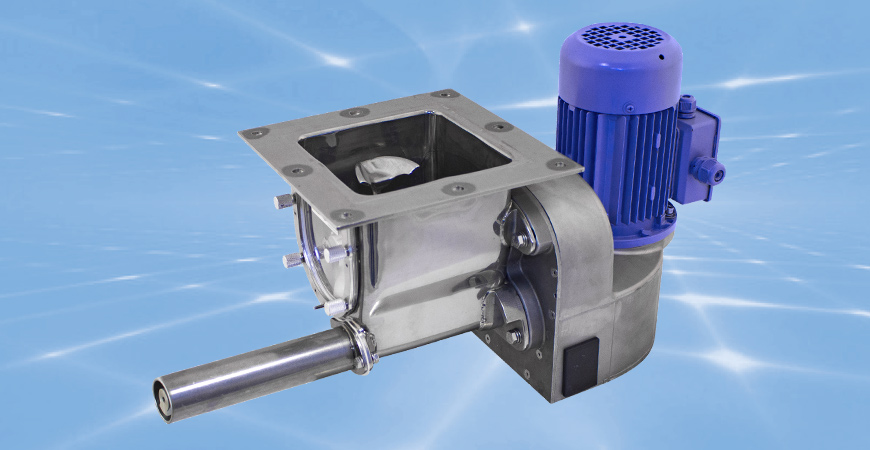
Rotary feeders: the stabilising interface for conveying and filtration
Often working quietly in the background, rotary feeders (rotary valves) play a crucial role in stabilising bulk handling systems.
They provide controlled discharge from hoppers, silos, cyclones and bag filter houses, while also acting as a consistent interface to pneumatic conveying systems.
What rotary feeders do best
Rotary feeders are commonly used to:
- provide continuous controlled discharge
- stabilise loading of pneumatic conveying lines
- limit uncontrolled material release and dust propagation
- operate reliably in demanding industrial duty cycles
Drop-through rotary valve RVR
The RVR drop-through rotary valve from WAMGROUP is typically used beneath hoppers or filtration equipment where controlled gravity discharge is required.
Stable material discharge improves downstream performance, particularly where conveying or processing steps require consistent feed conditions.
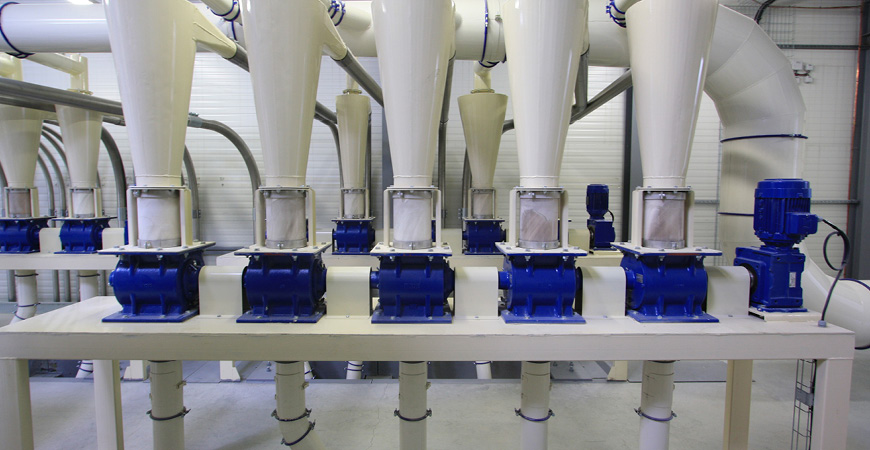
Blow-through rotary valve RVS
The RVS rotary feeder is designed specifically for feeding powdery or granular materials into pneumatic conveying systems.
Its role is critical in maintaining stable injection of material into the conveying air stream, helping to reduce surging and improve overall line performance.
Across industries such as feed and food processing, plastics manufacturing, building materials production, mining and environmental technology, rotary feeders provide a reliable interface between storage, filtration and conveying systems.
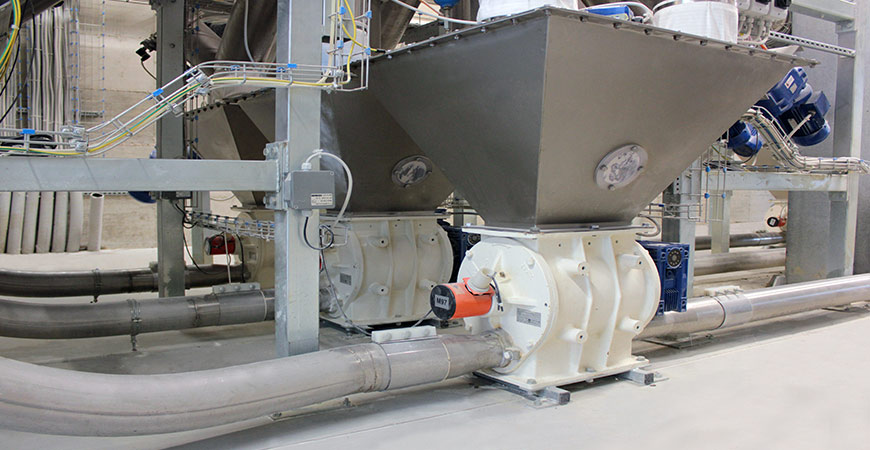
Selecting the right feeder family
Choosing the correct feeder solution depends on understanding the role the feeder must perform within the plant.
A practical selection approach often begins with three key questions.
Step 1 – Define the process role
Extraction from storage: screw feeders
Micro-ingredient dosing: micro-batch feeders
Interface to pneumatic conveying or filtration: rotary feeders
Step 2 – Identify the main operational risk
Flowability challenges: feeder concepts designed for difficult materials
Recipe variability: repeatable micro-batch dosing solutions
Conveying instability: rotary feeders supporting stable pneumatic conveying
Step 3 – Match the feeder to its typical application
Screw feeders (TU, ES): robust extraction and metering
Micro-batch feeders (MBF, MBH): precise micro-ingredient dosing
Rotary feeders (RVR, RVS): stable discharge and conveying interfaces
Reducing disturbances and improving plant performance
Most production facilities do not lose performance primarily through major equipment failures. Instead, losses accumulate through continuous minor disturbances: unstable material flow, repeated manual interventions, dust management issues and process corrections.
A feeding strategy aligned with the process can eliminate many of these inefficiencies at their source.
The result is:
- more stable recipes and product quality
- smoother pneumatic conveying performance
- improved housekeeping and reduced dust emissions
- higher plant uptime
- greater overall process control
Across the industries served by WAMGROUP in bulk solids handling – including feed and food, building and construction, plastics, heavy industries, renewable energy and environmental technology – the principle remains consistent:
stabilise the feed, and the entire plant becomes more predictable, cleaner and easier to manage.
Whether the requirement is robust extraction through screw feeders, precise dosing through micro-batch feeders, or stable conveying interfaces through rotary feeders, WAMGROUP provides feeder solutions designed to stabilise bulk processes from the very first step.
To explore the feeder families and the reference models TXF, ES, MBF, MBH, RVR and RVS, visit the new WAMGROUP websites at wamgroup.com and discover the most effective feeding concept for your application.