


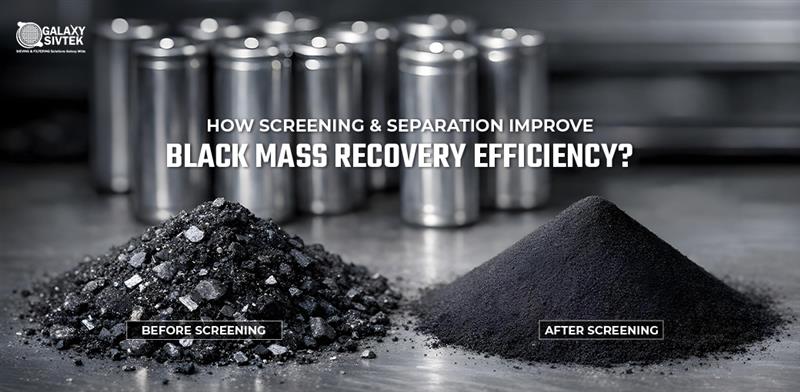
At the heart of lithium-ion battery recycling lies black mass a fine, high-value powder that contains most of these critical metals. While much attention is often given to chemical extraction methods, the mechanical processing stages, especially screening and separation, play a decisive role in determining black mass quality and recovery efficiency.
What Is Black Mass and Why It Matters
Black mass which is a product of the mechanical processing of spent lithium ion batteries and is made up of cathode and anode active materials. It usually contains Lithium, Cobalt, Nickel, Manganese and Graphite.
This material is later processed through hydrometallurgical or pyrometallurgical routes to recover individual metals. Also we see that the purity and consistency of black mass report into recovery yields, chemical use, and total recycling economics.
Mechanical Recycling: The Foundation of Black Mass Recovery
Most battery recycling plants begin with a mechanical treatment process that includes:
- Battery packs being discharged and dismantled
- Shredding or crushing of cells and modules
- Initial sorting of casing materials (aluminium, copper, plastics)
- Screening and classifying the crushed material
- Collection of black mass for further processing
In these steps, the screening & separation process serves as the control point that leads from the handling of the material to the recovery of the fine powder.
Why Screening Is Critical in Black Mass Recovery
After shredding, the resulting material will consist of a complex mixture of:
- Fine black mass powder
- Aluminium and copper foils
- Plastic separators
- Residual casing fragments
These materials are not screened properly so that black mass purification is decreased, and downstream chemical processes are contaminated.
Effective screening enables recyclers to:
- Separate fine black material from coarse material and plastic materials
- Improve black mass purity, reducing unwanted aluminium or copper contamination
- Increase recovery yield by minimizing black mass losses
- Stabilize downstream hydrometallurgical processes
Ineffective screening will lead to an increase in the consumption of chemicals used, reduced rates of metal recovery, or increased costs of operation.
Challenges in Screening Black Mass
Black mass presents several processing challenges:
- Extremely fine particle size
- Dusty and cohesive behaviour
- Variations in particle distribution depending on battery chemistry
- Abrasive nature of mixed metal content
These requirements require strong high-efficiency screening systems that can be used to screen fine materials without blinding or often loss of throughput.
Screening Solutions Used in Battery Recycling Plants
Recyclers are facing challenges and thus they depend on high-vibration gyratory or industrial screening systems that can:
- Accurately separate fine black mass from larger fractions
- Handle continuous, high-throughput operations
- Maintain stable performance despite material variability
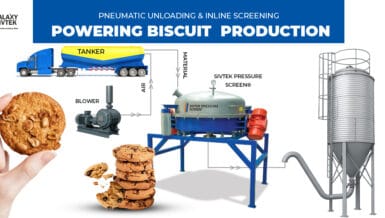
Industrial screening solutions from manufacturers such as Galaxy Sivtek are commonly applied at this stage to support efficient black mass separation while maintaining process reliability.
The focus here is not on the equipment itself, but on what effective screening achieves: cleaner black mass, improved recovery efficiency, and smoother downstream processing.
Impact on Downstream Metal Recovery
Well-screened black mass offers several benefits to the chemical recovery stages:
- Lower aluminium and copper contamination
- More predictable leaching behaviour
- Selectivity enhancement in metal extraction processes
- Lower reagent usage and waste generation
In conclusion, the key to successful chemical recovery is improved mechanical separation.
Sustainability and the Bigger Picture
As governments and manufacturers push toward circular battery supply chains, black mass recovery becomes a strategic resource pathway rather than a waste-management exercise. Efficient screening is a process that helps not only to maximize material recovery but also to reduce the environmental impact which, together, supports the wider goals of sustainable battery manufacture and resource independence.
Conclusion
Chemical extraction methods do not define black mass recovery at all. The recycling of lithium-ion batteries starts off with mechanical processing and, especially important, screening and separation. By efficiently isolating black mass from shredded battery materials, recyclers can improve recovery yields, reduce processing costs, and enhance overall sustainability.
As the battery recycling industry scales, the role of reliable, high-performance screening systems will continue to grow quietly but decisively shaping the future of circular energy storage.