


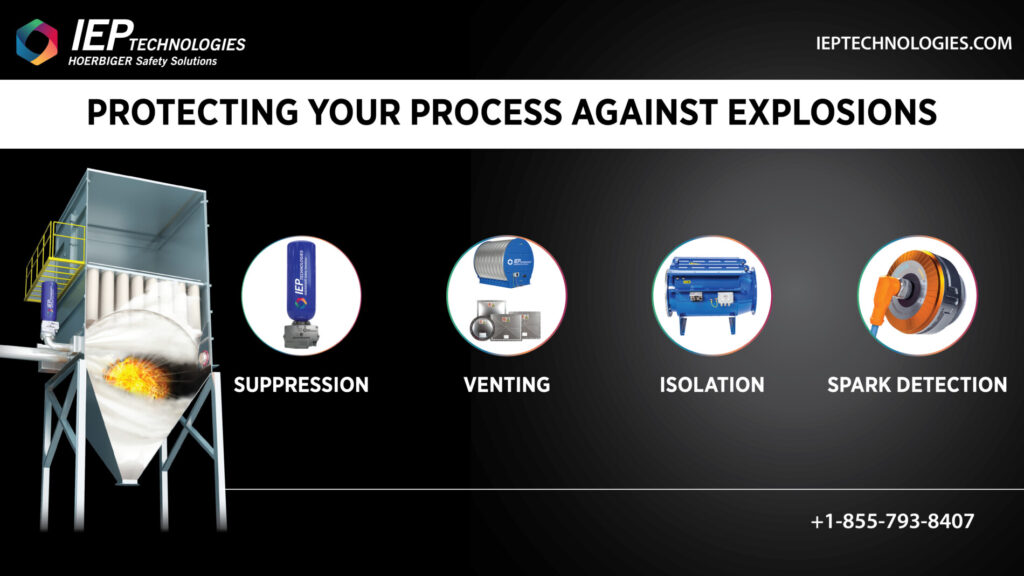
Active explosion protection systems are designed to detect the early stages of a deflagration and respond rapidly to suppress it before it can spread. These systems—typically categorized as explosion suppression and chemical or mechanical isolation—have been in use for more than 70 years and have significantly improved safety and operational resilience.
Despite their proven effectiveness, traditional active systems have faced challenges. Nuisance activations, often triggered by process pressure fluctuations or limitations in single-point detection methods, can result in unnecessary shutdowns, lost production, and increased costs. Advances in technology are addressing these issues, leading to more reliable and efficient solutions. Five areas in particular highlight where progress is most evident: system design methodology, intelligent detection, infrared sensing, electromechanical suppressors, and control unit technology.
Enhanced System Design
Early explosion protection designs relied heavily on simplified calculations based on vessel size and dust concentration. While effective as a starting point, this approach often did not capture the complexity of vessels under consideration or the operating conditions of the application, both of which will impact the efficacy of an explosion protection system.
Modern design methodologies now account for a much wider range of variables. These include dust explosivity characteristics, vessel geometry, possible ignition locations, detection sensitivity, impact of connection and openings on detection, and the efficiency of suppressant discharge. Advanced computer modeling tools allow engineers to simulate multiple scenarios—such as varying dust-air mixtures and ignition points—to better predict system performance.
These tools also improve the accuracy of reduced explosion pressure (PRED) calculations, leading to more tailored and effective protection strategies. The result is a more precise approach that aligns system performance with actual process conditions.
Intelligent Detection
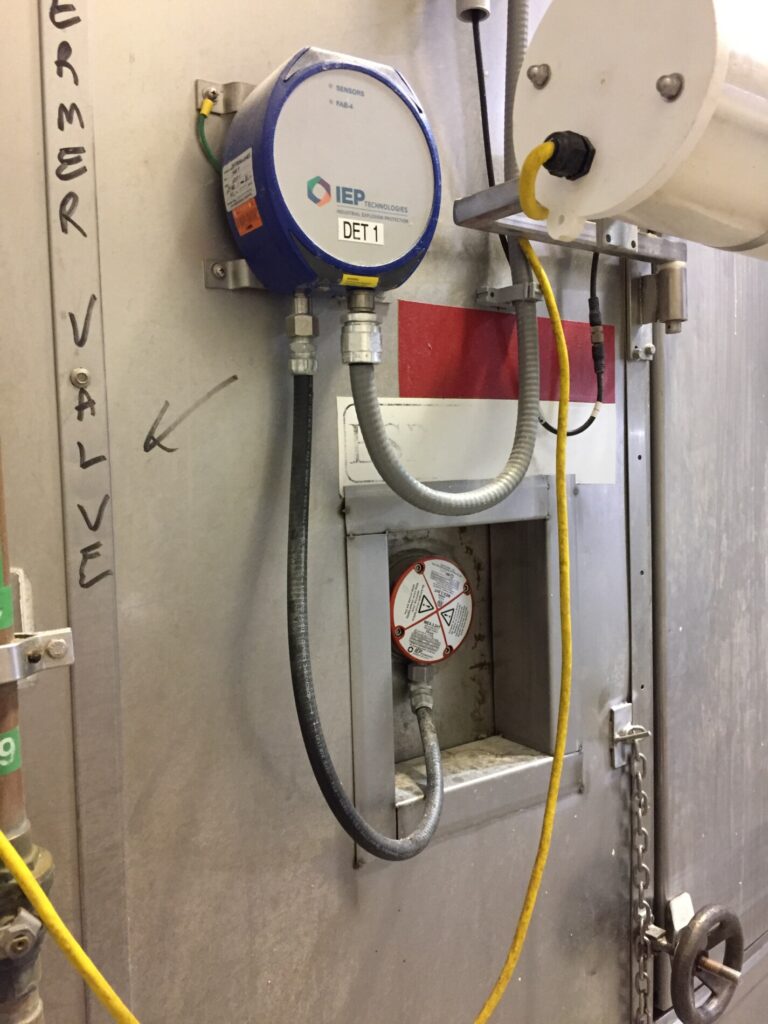
Detection technology has evolved significantly from traditional fixed set-point pressure sensors, also known as static detection. While those sensors remain widely used, they can be prone to false alarms caused by normal process pressure variations. For negative or vacuum pressure applications, the use of static detection only can result in a delay in detection while the deflagration pressure increases from the negative starting point until it reached the pre-set positive pressure activation threshold.
Newer systems use dynamic “rate of rise” detection, which monitors how quickly pressure increases rather than relying on a fixed threshold. This allows systems to distinguish between routine fluctuations and the rapid changes associated with an explosion, significantly reducing nuisance activations.
Many modern detectors also incorporate data logging and programmable features. These capabilities enable application-specific setup before operation and allow simulation of both normal and abnormal conditions. After an event, stored pressure-time data can be reviewed to confirm system performance and help identify the root cause, improving future reliability.
Infrared Detection for Complex Applications
In some applications, especially those involving long duct runs or materials with low explosivity characteristics (KST), pressure detection alone may not provide sufficient response time. Infrared (IR) detection offers an additional layer of protection in these situations.
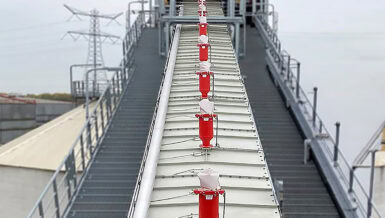
IR detectors identify flames directly, often before pressure builds to detectable levels. This is particularly useful in ducting, where a flame front can propagate ahead of a significant pressure rise. By combining IR and pressure detection, systems can respond more quickly and reliably.
This approach enhances explosion isolation effectiveness and allows for more flexible placement of isolation devices. It also ensures dependable performance across a wider range of operating conditions and explosion scenarios.
Electromechanical Suppressors
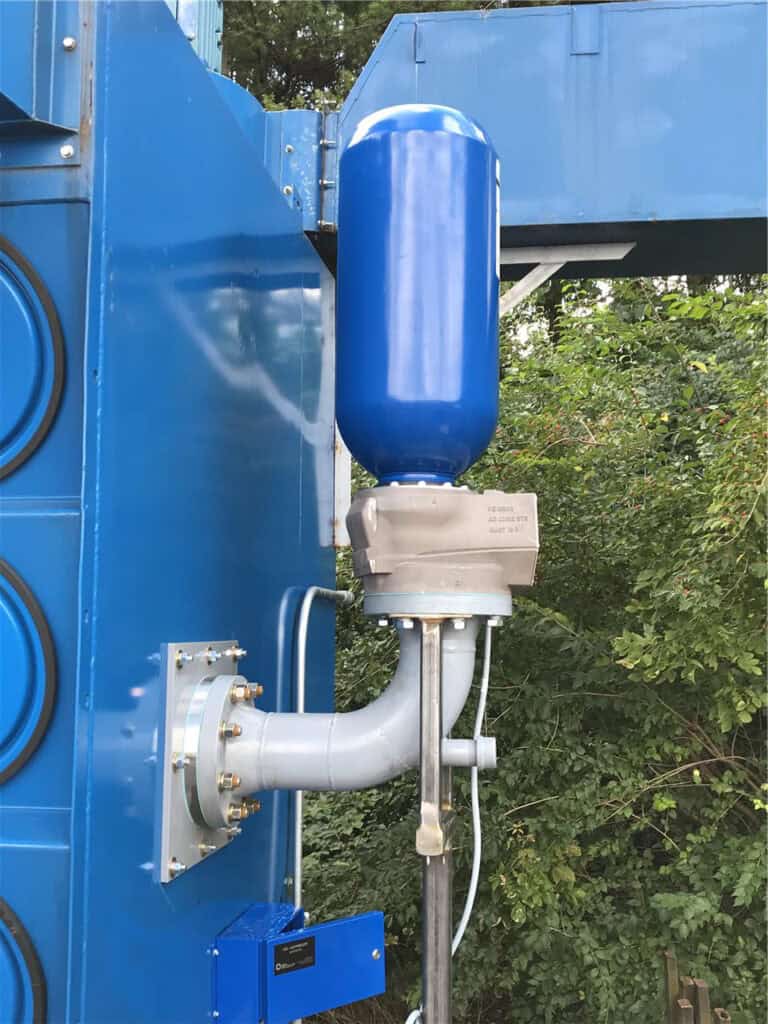
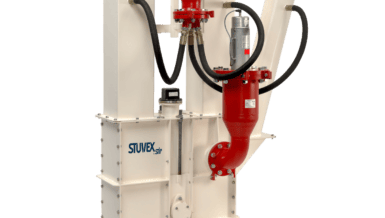
A major recent advancement in explosion protection is the development of electromechanical suppression systems. Traditional suppressors rely on pyrotechnic devices to achieve rapid activation, but these components can only be tested destructively and often involve additional regulatory and logistical challenges.
Electromechanical suppressors eliminate these limitations by allowing non-destructive functional testing during maintenance. This ensures that systems remain fully operational without requiring component replacement after testing, improving reliability and reducing costs.
These systems also feature enhanced safety and diagnostic capabilities, including pressure monitoring, integrated lockout/tagout functions, and compliance with safety standards such as SIL ratings and hazardous area approvals. Together, these features provide greater confidence in both performance and safety.
Advanced Control Systems
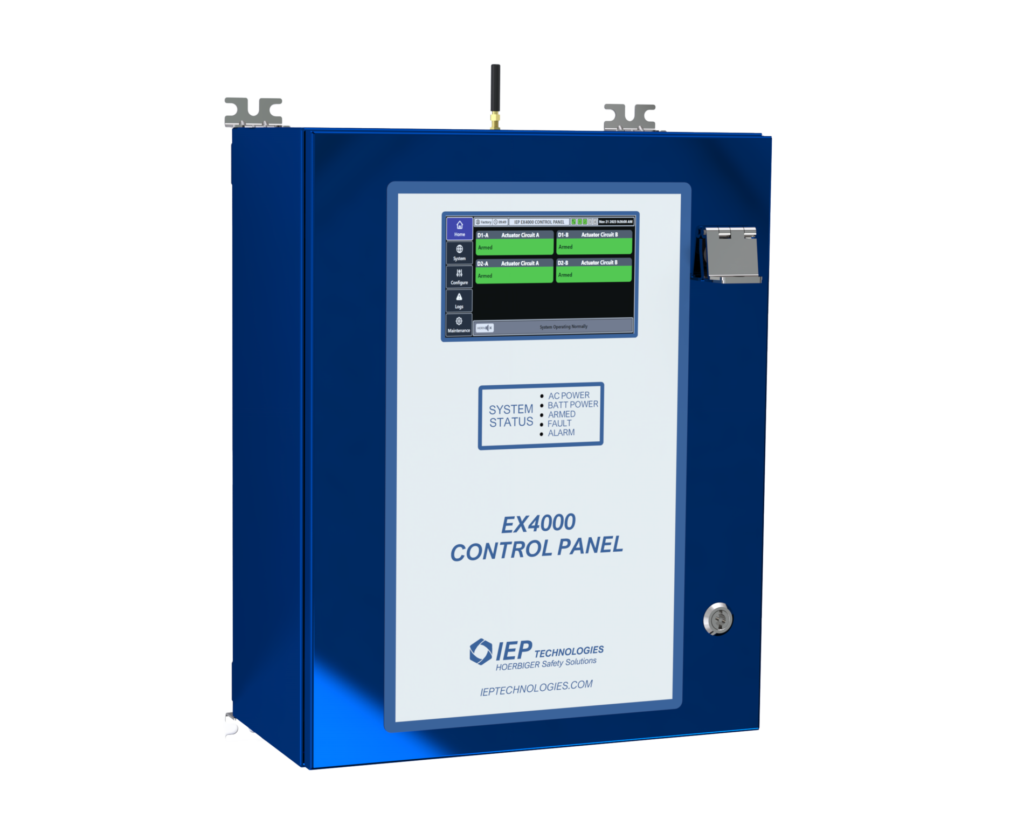
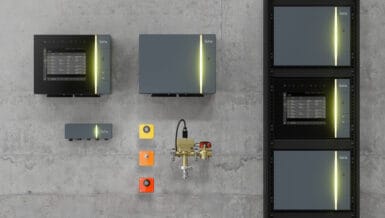
Control units serve as the central coordination hub for explosion protection systems and their capabilities have advance considerably. In the past, controllers were relatively simple, but modern units are far more capable.
Today’s controllers are microprocessor-based and can manage multiple protection zones—often up to 32—within a single unit. This zoning capability allows for targeted activation of suppression and isolation measures, reducing unnecessary disruption to unaffected parts of a facility.
Modern control units also include digital displays, self-diagnostics, and event logging with time stamps, making monitoring and troubleshooting more efficient. In addition, improved communication capabilities allow integration with plant-wide control systems, enhancing visibility and coordination.
Looking Ahead
Advances in active explosion protection are delivering clear benefits for industrial operators. Today’s systems combine improved design precision, smarter detection methods, enhanced diagnostics, and greater flexibility. Key advantages include:
- More comprehensive, simulation-based system design
- Reduced false activations through dynamic detection
- Improved sensing with combined pressure and infrared technologies
- Testable, reliable electromechanical suppression systems
- Multi-zone control with advanced diagnostics and integration
As innovation continues, explosion protection systems will become even more intelligent and adaptable. For processing industries, this means stronger safety performance while minimizing costly disruptions—an increasingly important balance in modern operations.