


Scaling up operations while maintaining efficiency and quality remains a challenge for food manufacturers—yet it’s more important than ever. According to Precedence Research, the food & beverage sector will grow to $14.72 trillion by 2034, with automation and technological advancements contributing to overall market growth.
However, without the proper programs to receive and interpret inventory data, automation is rendered counterintuitive. Thus, manufacturers must choose equipment and cost-effective integration tools that offer seamless analysis and uninterrupted performance.
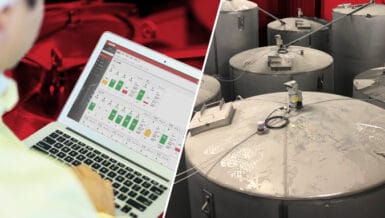
An example of this combined approach is continuous level sensors mounted in bulk-ingredient storage vessels and monitoring software that allows operators to view on-hand ingredient amounts in real time.
Importance of Automated Measurements in Food & Beverage Processing
The simple truth: fast-paced manufacturing environments are incompatible with manual level measurements. By the time a worker retrieves a measurement and logs it into a control system, the level within the process vessel has likely already changed.
Installing automated level sensors in storage tanks, hoppers, vats, and mixers eliminates guesswork, uncertainty, and process interruptions. Manufacturers don’t need to rely on climbing storage vessels or be concerned with unevenly piled bulk material—their powder, pellet, granulated, slurry, or liquid ingredient measurements are taken automatically.
Introducing automation in sanitary or hygienic applications enables:
- Safer Raw Ingredient Handling: Protect the quality of ingredients while eliminating exposure to outside contaminants
- Clean-in-Place (CIP) Compatibility: Choose sensors with high resistance to water ingress to maintain performance in environments with frequent CIP cycles
- Enhanced Food Safety: Non-contact measurement and accurate measurement data reduces waste, spoilage, and improves traceability
- Smarter Formulation: Precise ingredient measurements streamline batching processes and minimize out-of-spec product
- Better Visibility: All departments—including production, procurement, and finance—view the same data as it continuously updates, strengthening communication
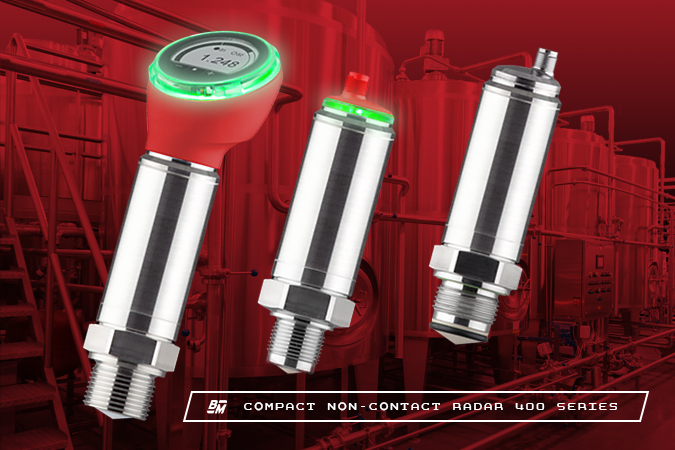
Compact Non-Contact Technology for Pressure Vessels
When selecting level measurement technologies for use in food and beverage plants, operators should account for three considerations before selecting their sensor:
- How large is the vessel that will be measured?
- What type of bulk materials will need to be monitored?
- Can configuration or calibration be performed without planned downtime?
Non-contact radar sensors with 3A, FDA, and EHEDG approvals are often the most precise, robust choice.
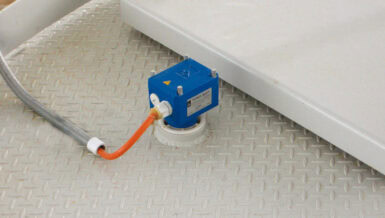
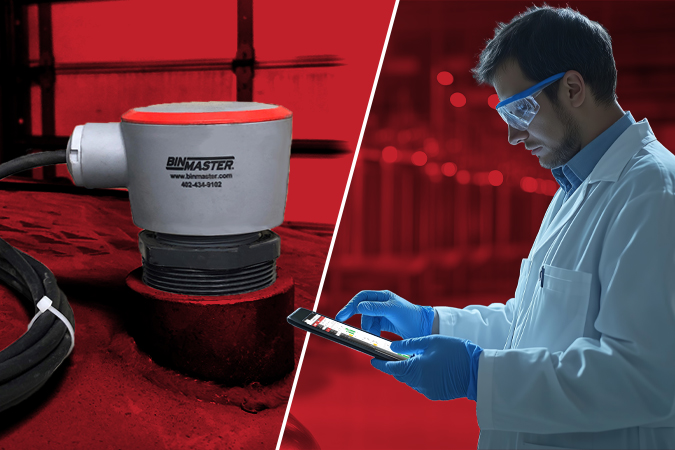
The CNCR-400 compact radar series from BinMaster is engineered for reliability in hygienic applications with a range of up to 49 ft. (17 m). Its benefits to processing include minimal intrusion into the process vessel or storage container, non-contact measurements, accuracy within 0.2” (5 mm), and resistance to dust, foam, condensation, turbulence, and buildup on the sensor.
CNCR-400 radars include three different models for measuring liquids, sauces and slurries, flour, sugar, and other food-grade bulk solids:
- A simple, sanitary stainless-steel housing
- A configurable light ring status indicator
- An integrated digital display and adjustable light ring indicator
The only required manual intervention for the sensors occurs during installation or during minimal maintenance. Otherwise, all can be configured and adjusted at any time using a Bluetooth app via phone or tablet, helping ensure that high-value ingredients within a vessel remain uncontaminated and uncompromised.
How Food Manufacturers Connect Sensors & Systems
Modern level sensing technologies may include multiple outputs to facilitate integration. With this approach, processors can choose between wired data transmission to local control equipment or wireless, cloud-based communication to enterprise resource planning (ERP) systems or cloud-based monitoring software.
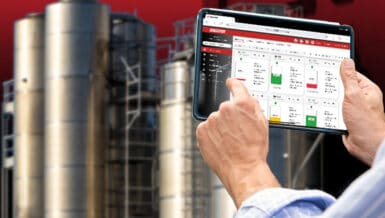
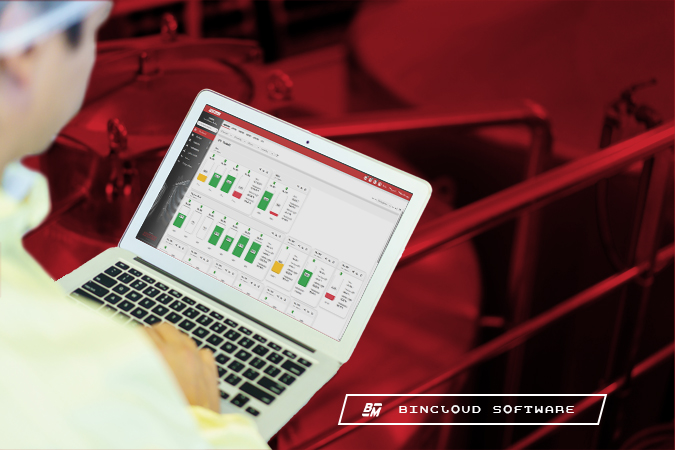
CNCR-400 radar sensors represent the intersection of automation and integration by offering both options simultaneously. Cloud software—for example, BinCloud® by BinMaster—goes beyond connecting sensors with systems; it supplies timely inventory data to the workers who need it most.
Remote inventory management software provides multi-site visibility to support data-driven procurement decisions. Workers can coordinate supply chain planning and logistics scheduling within the app via a phone, tablet, or PC. Automated text and email notifications alert necessary workers to prevent costly downtime.
CNCR-400 sensors include simple communication protocols for ease of integration with industrial controls, such as PLC devices and automated pump control systems.
Sensors with point-to-point methods, such as IO-Link, or universal communications like 4/20 mA and Modbus RTU are typically the best choices—dependent on the communications protocol being used by industrial equipment. Overall, the less system complexity, the better—especially when it’s time to scale up operations.
Choosing Smart, Sanitary Inventory Management Tools
Reliable automation and effortless integration provide vast operational benefits that extend to every market of industrial food and beverage processing: including snack foods, brewing, dairy production, and pet food manufacturing.
While costs and sanitary approvals must be considered when building an inventory management system, flexibility must also be a factor. As automation is increasingly applied, processors must be mindful about the inventory sensors, IoT systems, and network gateways they select to ensure efficient enterprise-wide operations.