


While every process plant has unique requirements, experience across many industries shows that standardised solutions frequently offer significant advantages in terms of reliability, engineering efficiency and project execution.
Understanding when to standardise and when to customise is therefore an important consideration for engineers and project managers.
The appeal of custom solutions
Custom-designed equipment is sometimes necessary in highly specialised applications. Unique material properties, space constraints or integration requirements can require tailor-made designs.
In such cases, custom engineering allows equipment to be adapted precisely to the process conditions.
However, fully custom solutions also introduce additional complexity.
They often involve:
- longer engineering time
- increased design verification requirements
- higher manufacturing costs
- limited operational reference cases
Because the design has not been widely implemented before, predicting long-term performance may also be more challenging.
The strength of standardization
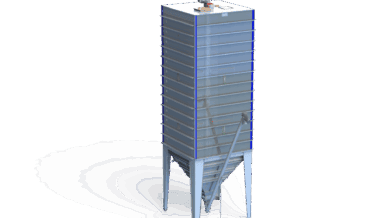
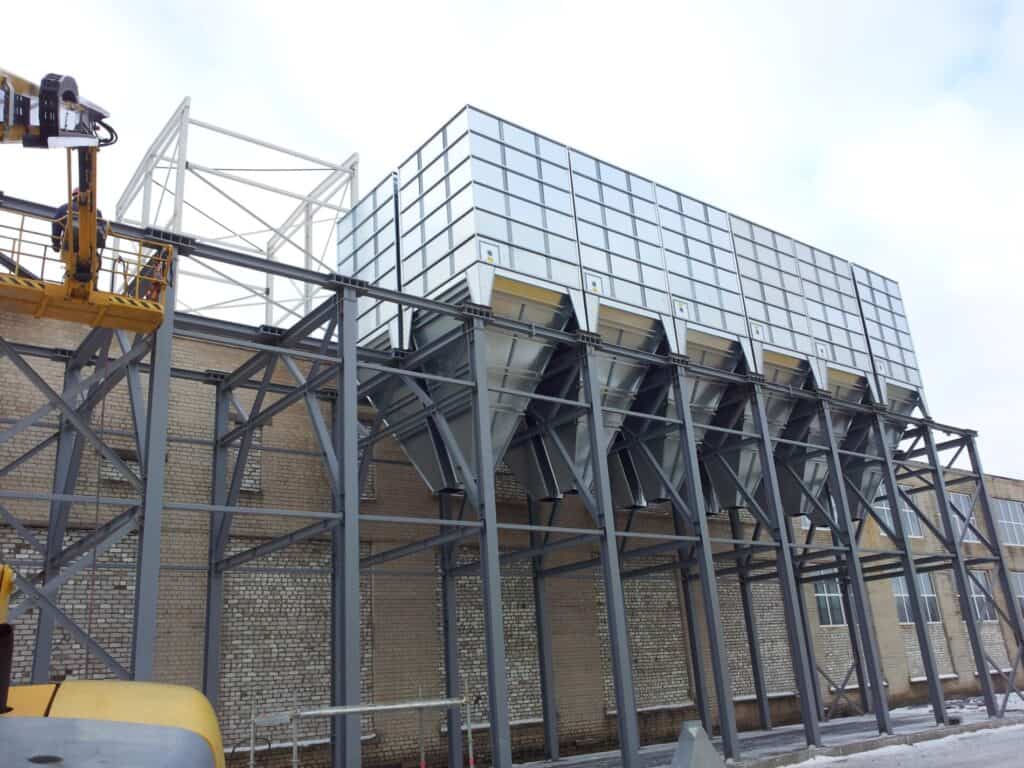
Standardised silo systems, on the other hand, are typically based on designs that have been used in multiple projects.
This accumulated operational experience provides several benefits:
Proven performance
Standard designs have already demonstrated reliability across many installations.
Reduced engineering time
Project teams can focus on system integration rather than designing individual components from scratch.
Predictable costs
Manufacturing processes for standard components are usually well established.
Simplified documentation
Standardised equipment often includes complete technical documentation and installation guidelines.
Configurable systems as a compromise
In many modern silo systems, the distinction between standardisation and customisation is less rigid than it once was.
Many manufacturers now offer configurable systems that combine standard structural elements with adjustable parameters such as:
- outlet design
- discharge equipment
- support structures
- instrumentation options
This approach allows engineers to adapt equipment to the process requirements while maintaining the advantages of a proven base design.
Engineering efficiency in large projects
For large industrial installations, the use of standardised equipment can significantly improve project execution.
When project teams work with well-documented standard components, communication between engineers, manufacturers and contractors becomes simpler. Installation procedures are clearer, and the risk of unexpected complications during assembly is reduced.
Custom solutions still play an important role in specialised applications. However, when standardised systems can meet the operational requirements, they often provide a more efficient and predictable path from engineering design to plant operation.
Finding the right balance
In silo engineering, the most effective solutions often lie between full standardisation and complete customisation.
By combining proven structural designs with configurable options, engineers can achieve both reliability and flexibility.
In modern bulk material handling systems, this balanced approach helps ensure that storage solutions remain both technically robust and economically efficient throughout the lifecycle of the plant.