



The prime target
The market for industrial conveyor belts has always been competitive but recent years have seen something of a price war, with mind-boggling price differences between belts that are claimed to be of an identical specification. This battle for market share is dominated by manufacturers in South and East Asia, primarily China. As with so many other industries before them such as steel to name but one of many, their strategy is to saturate the market and squeeze their competitors out of business by selling at prices which, especially for European-based belt manufacturers, are simply unachievable.
Consequently, many manufacturers in Europe and elsewhere have disappeared, leaving mostly only the big brand players* such as Fenner Dunlop (owned by Michelin Group), who remain wholly focused on the quality/value end of the market. This approach is only possible thanks to their advanced rubber technology and quality culture. Rubber used for road vehicle tyres must, out of absolute necessity, only be of the very highest standards possible. (*Of the world’s top 10 tyre manufacturers, Michelin ranks number 1 ).
When trying to establish the reasons for the huge differences in price and durability it is important to understand this background situation. The starting point is the rubber because it forms some 70% of the volume mass and some 50% of the cost. Consequently, it is the prime target for cost (price) cutting practices.
Creating the rubber – a science in itself
Because of its adaptability, conveyor belt rubber is almost entirely synthetic. The creation of rubber compounds (rubber compounding) is a highly scientific and complex process involving a multitude of ‘specific task’ chemicals, reinforcements, antioxidants, anti-degradants and many more that are mixed together with rubber polymers. The most common types are Styrene- Butadiene rubber (SBR), Natural rubber (NR), Butadiene rubber (BR) and Nitrile rubber (NBR) together with carbon black polymer, which represents some 20% of the volume and is integral to strength and ageing. If the mixing and vulcanisation process is not carried out to the highest standards then it will have serious performance and cost consequences for the end-user.
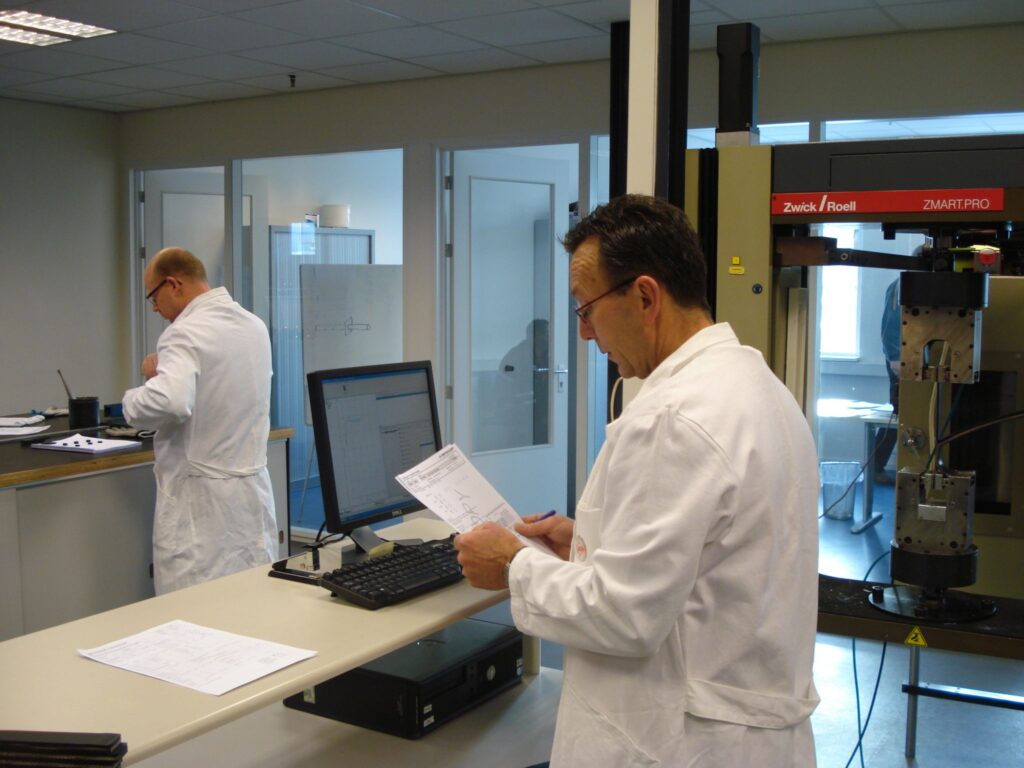
Conveyor belt rubber has to meet many different demands so each type must be produced using a very precise recipe of ingredients and production disciplines, all of which influence performance, durability and longevity. The most basic demands are resistance to abrasive wear and meeting specific minimum requirements in terms of tensile strength, elongation (stretch), hardness and resistance against tearing and the seriously damaging effects of ground level ozone and ultraviolet light (both sunlight and fluorescent light).
How cost-cutting impacts on quality.
There are several routine cost-cutting practices applied to rubber production. These include the use of unregulated, low-grade raw materials, the use of bulking (volumising) agents such as chalk and large proportions of recycled scrap rubber of highly questionable origin. Even more damaging is the substitution of essential polymers such as carbon black with low-grade versions created by burning scrap vehicle tyres. Another method is reduced quantities (and often the total omission) of key ingredients such as antioxidants that are essential to resist the rapid degradation caused by exposure to ozone and ultraviolet light.
These practices, plus others related to the fabrics used in the carcass for example, allow unscrupulous manufacturers to massively undercut the prices of the few remaining manufacturers at the quality end of the market such as the market leader, Fenner Dunlop who, despite such competition, remain totally committed to the principle of ‘lowest lifetime cost’.
Production control = quality control
Speaking to people in the impressive Fenner Dunlop production facility in Drachten in the Netherlands, there is a clear sense of pride that they are the only remaining European belt manufacturer that continues to make all of its own products using its own production facilities.
Very importantly, this includes the rubber, which even fewer of their competitors make themselves nowadays because it is cheaper to outsource the manufacturing of their rubber compounds, mostly to South and East Asian producers who are able to minimize production costs by mass-producing rubber compounds in extremely large quantities.
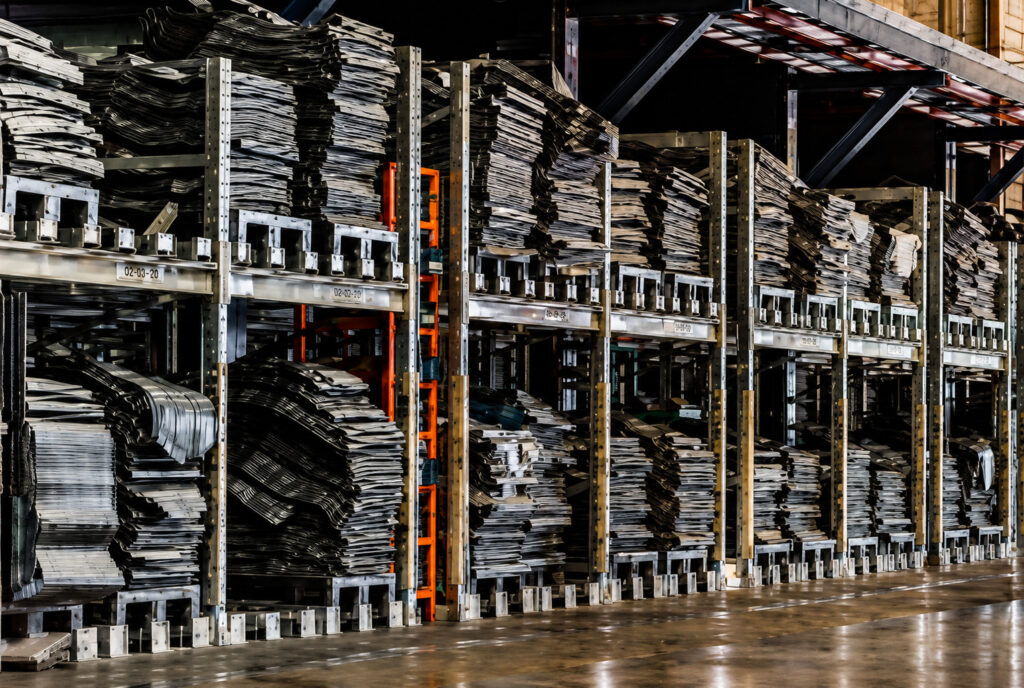
The downsides, however, outweigh the benefits. Firstly, outsourcing makes it almost impossible to apply the quality control disciplines needed to ensure the consistency of properties between batches of rubber produced at different times. Secondly, many compounds have a ‘best before’ shelf-life limitation, so they need to be vulcanized before important physical characteristics begin to diminish. Last but by no means least, the belt manufacturer can no longer guarantee that the raw materials used are compliant to European standards and other specific demands.
Safe to handle, safe for the environment
It is an inescapable fact of life that to make some rubber compounds it is necessary to use chemicals that are hazardous in their own right. Fortunately, at least as far as Europe is concerned, there are very strong regulations in place to protect humans and the environment such as REACH (Registration, Evaluation and Authorisation of Chemical substances) regulation EC 1907/2006 and EU Regulation No. 2019/1021 concerning the use of persistent organic pollutants (POP’s).

Sadly, most European belt suppliers continue to ignore these regulations, either completely or at least partially because doing so creates an extremely significant price advantage. Of even greater concern are manufacturers located outside of EU/EEA member states because they are not subject to these safety regulations. This means they are free to use unregulated raw materials, which cost much less compared to their regulated counterparts, even though those same materials may be entirely prohibited or at least have strict usage limitations within the European community.
According to Fenner Dunlop’s Innovation & Sustainability Director, Dr. Michiel Eijpe, outsourcing rubber production is not an option. “It is essential that we retain total control from beginning to end, from making the rubber through to the completed belt. This is necessary not only to consistently achieve identical high qualities and properties but also to comply with environmental and safety regulation, which is extremely important not just environmentally but to those who work in close proximity to conveyor belts every day”.
Conclusion
There can be no argument that the quality of the rubber has the biggest part to play in terms of day-to-day performance and operational lifetime. Unfortunately , as explained earlier, it also provides the biggest temptation for manufacturers to sacrifice those qualities to create a price advantage. Thankfully, Fenner Dunlop clearly has no intention of compromising their ‘lowest lifetime cost’ principles. Crucially, this means that the end-user market still has a choice. Long may it continue because if that choice did not exist then the survivors would be able to charge what they want.