


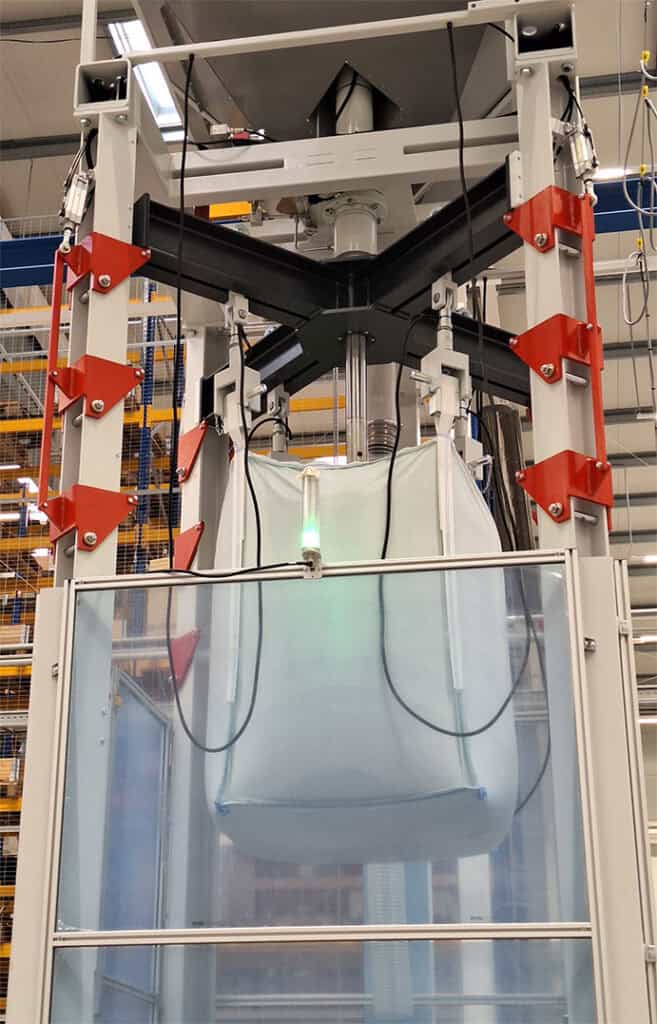
Manufacturers and transporters of dry bulk goods know it: They are a lightweight plastic packaging you can rely on. Big bags, technically known as FIBCs (Flexible Intermediate Bulk Containers), can carry up to 1,000 times their own weight—an unbeatable product-to-packaging weight ratio. To illustrate this, Starlinger is showcasing an FIBC testing rig at its booth at this year’s interpack, where big bags provided by Starlinger customers undergo a load test. In the so-called top-lift test, the fully filled big bags are lifted by their carrying loops and subjected to additional pressure from above. The test measures the load at which its fabric or seams eventually give way and tear. According to the European dangerous goods regulation (ADR), a single-use big bag must be able to withstand five times its rated load when suspended freely (called the “Safe Working Load” – SWL) in order to be used in logistics. Even stricter criteria apply for reusable big bags and when very high safety standards are required. Visitors can therefore look forward to a “wow” moment.
Versatile, sustainable, and crisis-proof
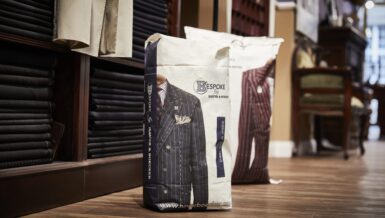
But plastic tape fabric isn’t just a major player in big bags: it is also used for smaller-volume packaging, such as sacks for rice, flour, cement, or chemical powders, ensuring the safe transport and storage of sensitive bulk goods. While many of these woven bags are closed by sewing, Starlinger also offers technologies for manufacturing bags with welded bag bottoms. This prevents product loss, stops moisture and contaminants from entering, and also simplifies production.
“The AD*STAR block bottom bags and PP*STAR pinch bottom bags which we have developed work like their paper or plastic film alternatives, but require no adhesive and are more robust and durable,” explained Harald Neumüller, CSO of Starlinger. “The major advantage of plastic tape fabric is its extremely low packaging weight combined with high tear strength and resistance to moisture. Low weight means less raw material usage—with high raw material prices, as we are currently experiencing, woven packaging has the lowest manufacturing costs while offering the best protection for the contents,” said Neumüller. In addition, high proportions of recycled material—for compliance with the EU Packaging and Packaging Waste Regulation (PPWR)—or CaCO3 can be added during production, which further reduces production costs. With specially designed machine types, such as the ad*starKON SE bag conversion line or the viscoSHEET SE PET sheet line, Starlinger offers packaging manufacturers cost-optimized machine models that guarantee maximum efficiency, minimal waste, and top quality at advantageous investment costs.
A sustainable and cost-effective alternative to paper bulk packaging
Based on years of market observation, Starlinger has continuously refined the AD*STAR block bottom bag and its production technology, most recently presenting the AD*STAR *prime bag at K 2025. It offers bag manufacturers great variety and flexibility: AD*STAR *prime bags can be produced in sizes ranging from 5 to 118 liters with high proportions of recycled polypropylene and are customizable to provide the right packaging for the respective product and application. “AD*STAR bags can be equipped with the same properties and features as other block bottom bags currently available on the market, yet they offer better protection and are more sustainable and cost-effective to manufacture,” explained David Grabenweger, AD*STAR Product Manager at Starlinger. “Compared to paper bags, they have a lower carbon footprint, a significantly lower breakage rate, and provide better protection against water and moisture. Our new AD*STAR *prime bag in particular can be equipped with all the features available on the market and represents—as cement packaging, for example—a viable alternative to paper.”
Durable and attractive: Pinch bottom bags made of PP fabric
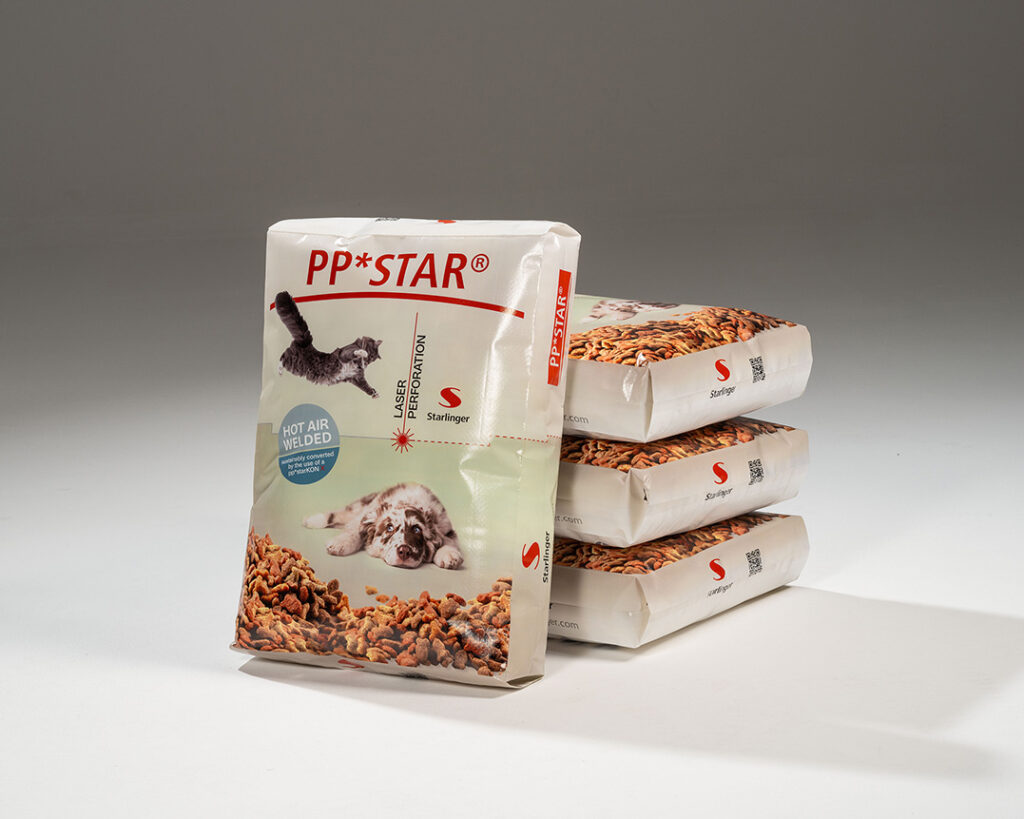
Starlinger’s PP*STAR pinch bottom bags are also made from polypropylene tape fabric—in this case, laminated with a BOPP film printed on the reverse side. Unlike in the previous PP*STAR production process, the pinch bottom of the bag is not glued but welded on Starlinger’s new pinch bottom bag conversion line. “For the development of the welding unit on our pp*starKON pinch bottom bag conversion line we drew on the experience from our AD*STAR bag production technology,” explained Claudia Hagn, PP*STAR Product Manager at Starlinger. “This eliminates the need for adhesives to close the pinch bottom, turning the PP*STAR bag into an easy-to-recycle mono-material packaging solution that is not only attractive but also extremely robust and durable despite its low weight.” In addition, welding simplifies the production process and expands the potential fields of application for the bags.
Proven recycling technologies for plastics
In addition to machines for woven plastic packaging production and PET sheet lines, Starlinger has been building systems for recycling and refining post-industrial and post-consumer plastic waste for more than 30 years. Designed with the expertise gained from decades of global experience, they guarantee energy-saving, efficient production and high-quality regranulates—including food-contact quality. National and international authorities such as the U.S. FDA and the EFSA in Europe have approved the recycling processes on Starlinger’s recoSTAR PET art systems (for PET), viscoZERO systems (for PET, polyolefins, and PS), and the recoSTAR dynamic systems (for HDPE bottle-to-bottle and HDPE/PP cap-to-cap recycling) for food-grade applications, and multinational brand owners fill their beverages in bottles made from 100% rPET, produced on Starlinger systems. For heavily contaminated post-consumer plastic packaging made of PP, PE, PA, PLA, or PS, Starlinger also offers proven processing solutions that produce recycled plastics which meet the highest market standards worldwide.
The power of circular packaging
“We want to enable closed-loop systems for plastic packaging that pay off for manufacturers,” Neumüller concluded. “Our aim is to make the woven plastic packaging produced on our machines easy to recycle after use so it can be turned into new woven packaging. And not only that should stay in the loop, but also other used plastic packaging. Starlinger bag production and PET sheet lines process recycled material, while our plastics recycling systems ensure that plastic waste from the industry and consumer sectors remains in the loop and does not end up in the nature or in landfills. For a tomorrow worth living in, so that our children can grow up in a healthy environment.”
Starlinger at interpack, May 7–13, 2026, Düsseldorf: Hall 11, Booth F20