


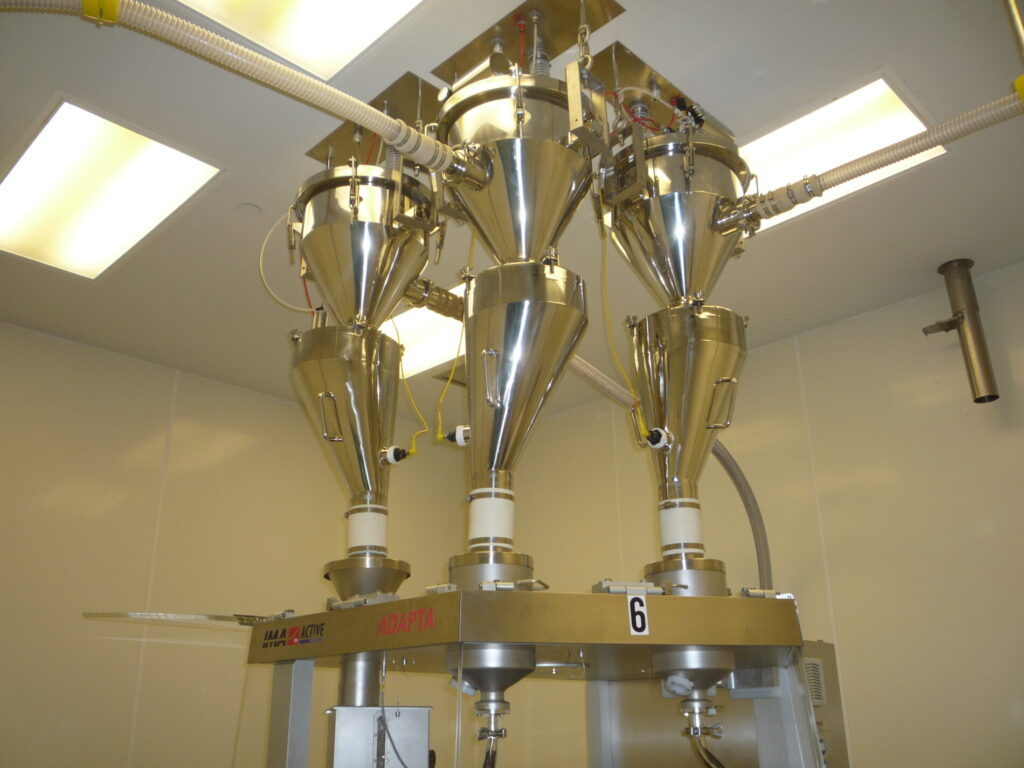
During tablet manufacturing, vacuum conveying systems can transfer APIs, excipients and formulated powder blends from drums, intermediate bulk containers, blenders or other upstream equipment to tablet press feed hoppers. The conveyor automatically replenishes the tablet press feeder based on material demand, helping maintain a consistent powder supply without relying on manual charging.
Keeping the pharmaceutical tablet press feeder adequately supplied is critical to stable tablet production. Interruptions or fluctuations in material delivery can affect equipment utilization and overall process consistency. Automated refill controls allow the vacuum conveyor to respond to the feeder’s level signals and deliver material as required. This creates an integrated transfer step between blending and compression while reducing manual lifting, open handling and potential dust exposure.
The same approach applies to capsule filling operations. Pharmaceutical powders and formulated blends can be conveyed directly to the receiving hopper of a capsule filling machine. System configuration including conveying velocity, filter design, material-contact surfaces and discharge arrangement is selected according to powder characteristics such as bulk density, particle size, flowability, cohesiveness and sensitivity to segregation.
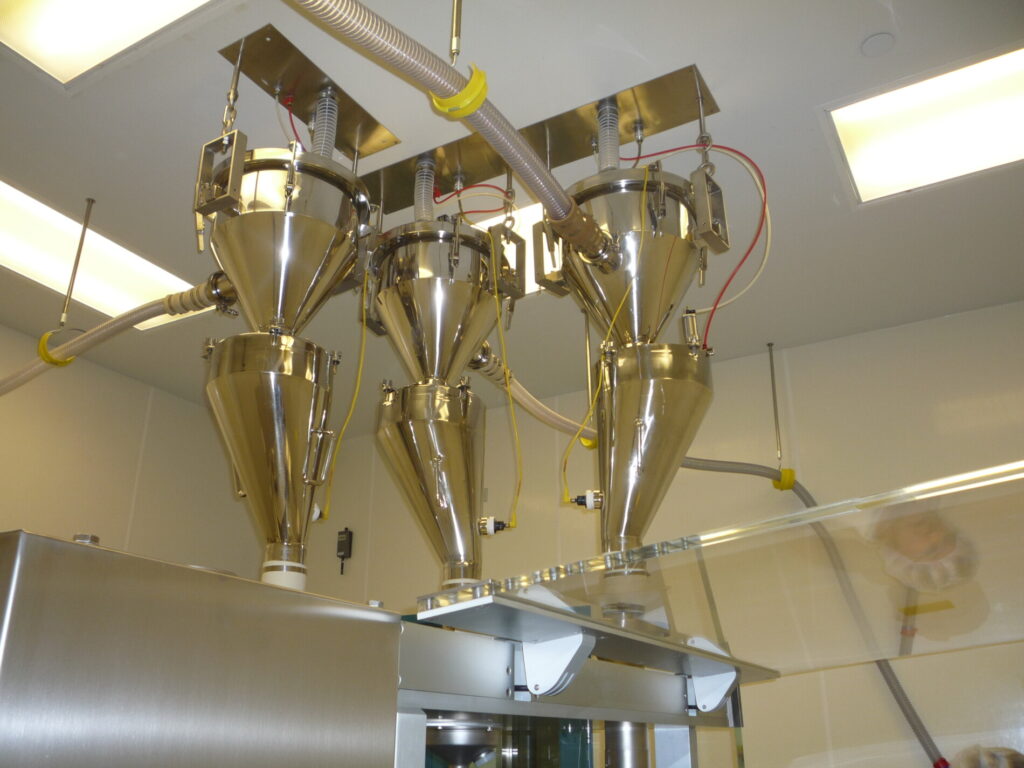
As pharmaceutical manufacturers move from traditional batch production toward continuous processing, automated material transfer becomes increasingly important. Vacuum conveying systems can connect previously separate operations and keep downstream feeders continuously supplied. When properly integrated with process controls and level instrumentation, the vacuum conveyor becomes part of a coordinated manufacturing line rather than an isolated material-transfer device.
VAC-U-MAX vacuum conveying systems can also be configured for contained pharmaceutical powder handling. Enclosed transfer helps reduce airborne dust and limits operator contact with APIs and potent compounds. Sanitary construction, smooth product-contact surfaces, appropriate filtration and designs that facilitate cleaning and changeover can be incorporated to support pharmaceutical production requirements.
Gentle Conveying of Finished Tablets and Capsules
Material handling does not end after tablet compression or capsule filling. Finished tablets, capsules and soft gelatin capsules must often be transferred to inspection, counting and packaging equipment.
VAC-U-MAX tablet and gel-cap conveying systems are engineered to move finished dosage forms gently. Controlled airflow and conveying velocity help minimize impacts that could chip tablets, damage coatings, scuff capsules or deform soft gelatin products. Equipment layout, tubing configuration and discharge design are evaluated to reduce unnecessary product contact and abrupt directional changes.
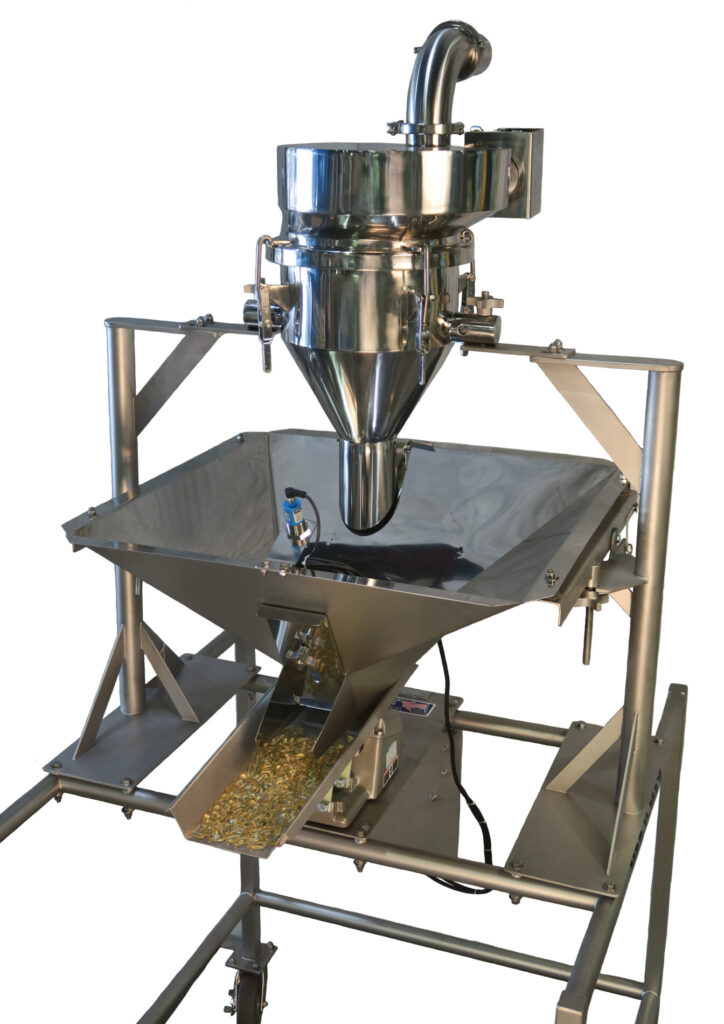
These systems can transfer finished products to rotary bottle-filling and counting machines, blister-packaging lines, pouch and sachet packaging equipment, vertical form-fill-seal machines, cartoners, inspection systems and other downstream packaging operations.
VAC-U-MAX can also automate the delivery of pharmaceutical powders and granular products to auger fillers, volumetric fillers, weigh fillers and other packaging-machine feed hoppers. By monitoring hopper levels and replenishing packaging equipment on demand, the conveying system helps prevent production interruptions and reduces the need for operators to manually handle material above the machine.
From APIs and excipients entering tablet presses and capsule fillers, to finished tablets and gel caps moving into packaging, VAC-U-MAX automates material-handling between critical pharmaceutical processes. The result is a more enclosed, efficient and coordinated production environment, supporting the industry’s continued movement toward greater automation and continuous pharmaceutical manufacturing.