
The problem: powder doesn’t always stay powder
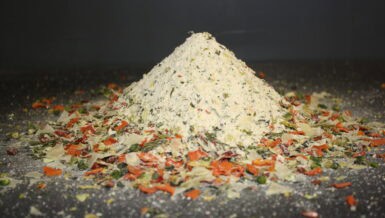
Anyone who works with dry ingredients knows the frustration. A powder that flowed perfectly last week shows up caked into hard lumps this week. It happens for simple reasons: humidity in the air, the weight of material pressing down inside a bag or silo, temperature swings, or just time spent sitting in storage. Fine powders like sugar, salt, milk powder, proteins, and many pharmaceutical ingredients are especially prone to it.
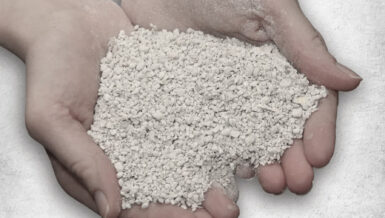
The powder itself is usually still perfectly good. The problem is purely physical: it has clumped together. But those clumps cause real trouble further down the line. They block the flow out of hoppers and bins. They throw off dosing and weighing, so batches come out inconsistent. They clog screens and jam equipment, which means unplanned stops and extra cleaning. In food and pharmaceutical production, where consistency is everything, a batch of lumpy material can quickly turn into a costly problem.
The solution: break the lumps, keep the powder
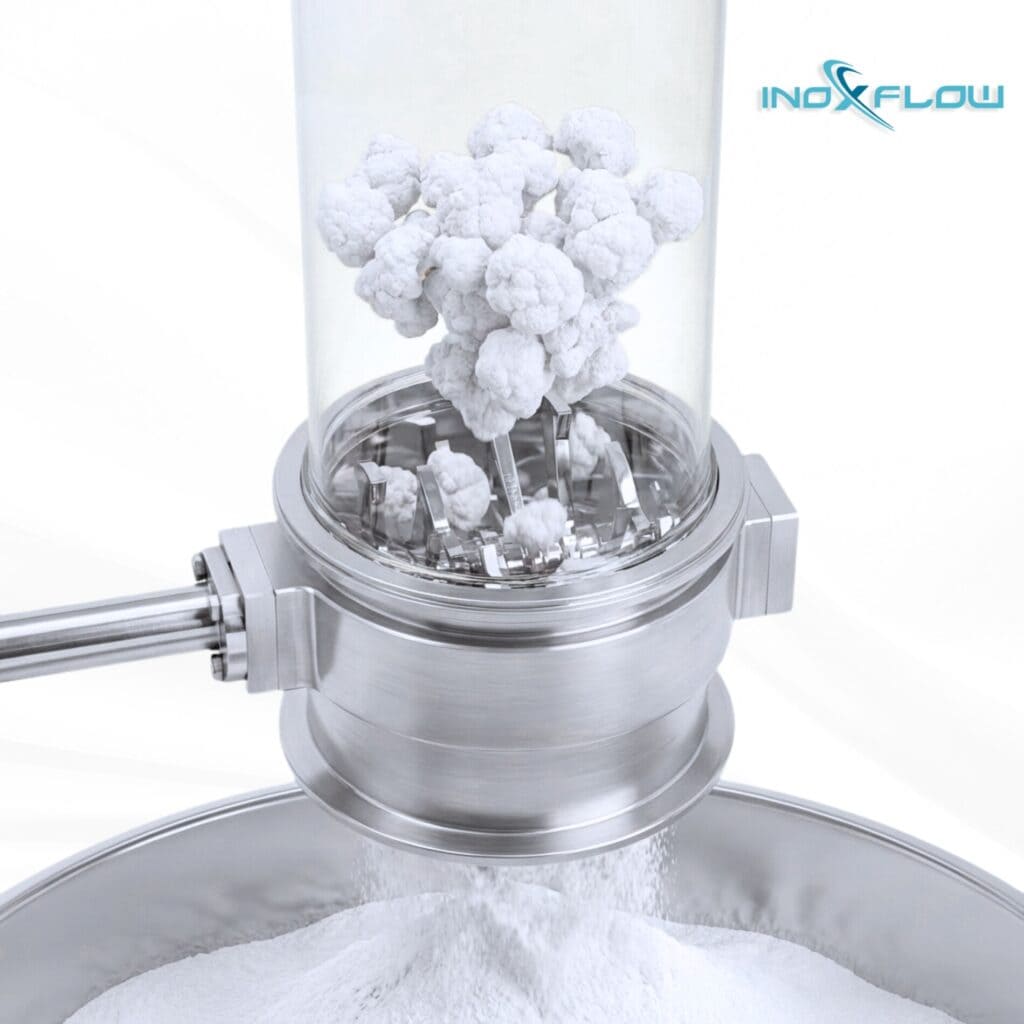
A lumpbreaker – sometimes called a delumper – solves this in the simplest possible way. It breaks the lumps back down into free-flowing powder before they reach the rest of your process.
The important word is gently. A lumpbreaker is not a mill. A mill is built to grind material into a fine powder, using a lot of energy and creating heat and dust along the way. A lumpbreaker only needs to undo the clumping – to turn caked material back into the loose, flowing powder it was meant to be, and nothing more. That means no heating of the product, far less dust, and no damage to what you’re processing. What goes in is what comes out, just flowing freely again. (The final particle size depends on the product itself, not on brute force.)
How the InoxFlow lumpbreaker works
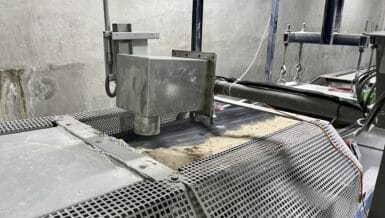
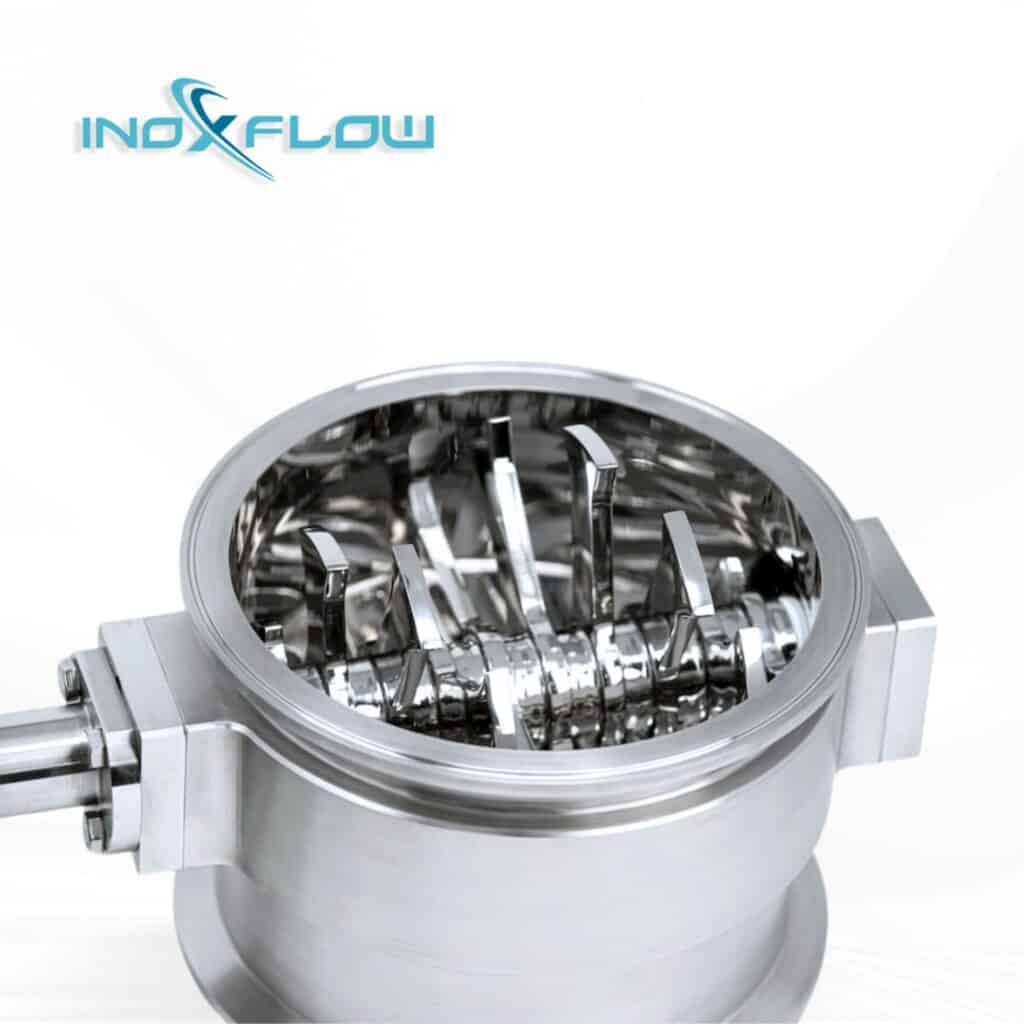
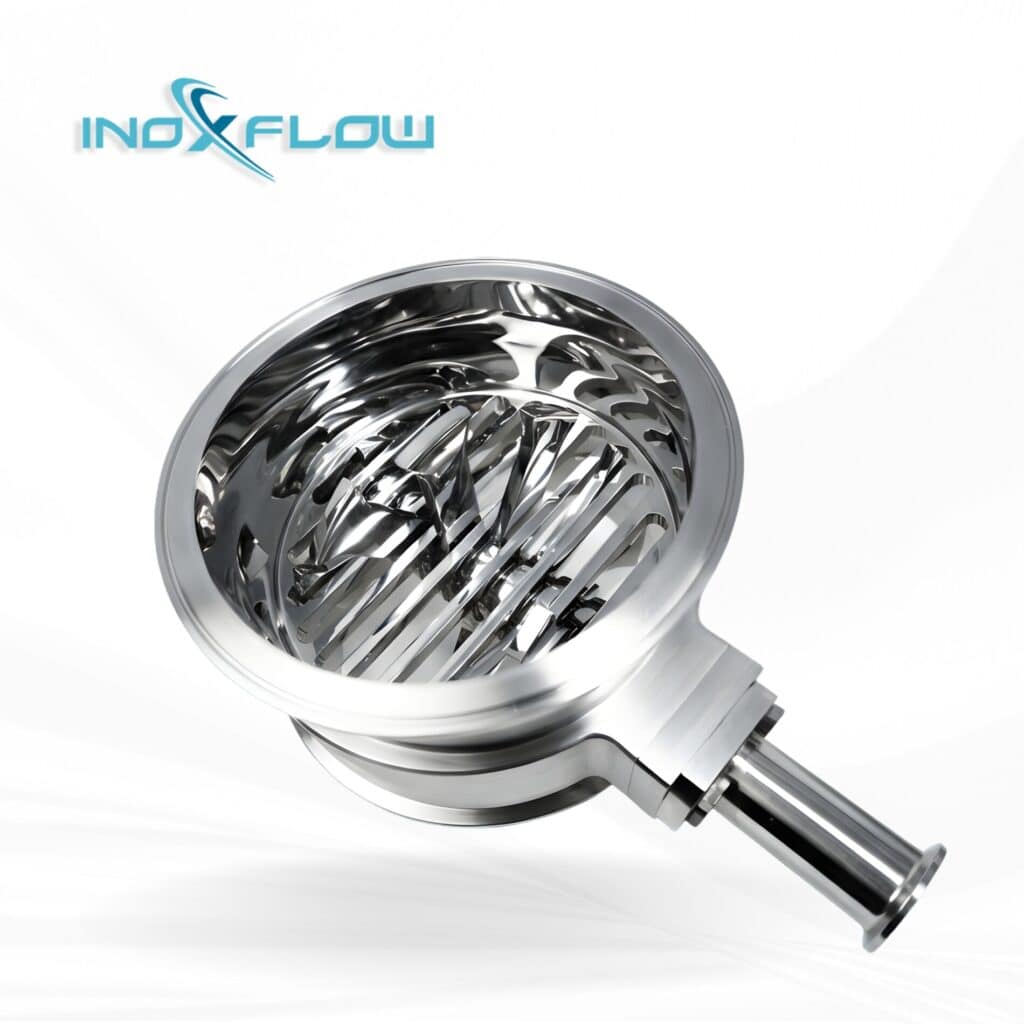
Inside the InoxFlow lumpbreaker, a single rotor turns within a screen. As lumpy material drops in, the rotor breaks the clumps against the screen until they are small enough to pass through and carry on their way.
A few practical details are what make it dependable day after day. The gap between the rotor and the screen can be adjusted to suit your product – set more aggressively for stubborn lumps, or more gently for delicate materials. The rotor runs on ball bearings and turns at a controlled speed, so it breaks lumps without pounding the product into dust, which means less waste and a cleaner result. It also runs in both directions, so if anything ever jams, you simply reverse it to clear the blockage instead of taking the line apart. And because it has a compact, in-line design, it fits easily into an existing system – usually at a discharge point, a bag-tipping station, or in the line feeding a pneumatic transfer.
What makes InoxFlow different
Most sanitary valves and powder equipment available in the industry are cast – made by pouring molten metal into a mould. InoxFlow does it differently. Every unit is machined from solid 316L stainless steel. That one choice makes a real difference in hygienic processing.
Casting can leave tiny pores in the metal – microscopic pockets where product and bacteria can hide, and which are hard to clean and validate. Machining from a solid block removes that risk entirely. The result is smoother surfaces, tighter tolerances, easier cleaning, and more consistent, longer-lasting performance. In food and pharma, where contamination control is non-negotiable, that’s exactly what you want.
The rest of the design follows the same hygienic thinking. Product-contact surfaces are mirror-polished and the whole unit is built for clean-in-place (CIP/WIP) washing, plus tool-free strip-down when a full manual clean is needed. All product-contact materials are FDA compliant. And because InoxFlow’s equipment is precision-made in Italy and highly customizable, the lumpbreaker can be tailored to your materials, sizes, connections, and drive setup – including an ATEX version for areas with explosive dust. You shouldn’t have to redesign your process to fit new equipment. At InoxFlow, we tailor every product to fit the system you already have.
Technical data
- Available sizes: 8″ (DN200), 10″ (DN250), 12″ (DN300). Other sizes available on request.
- Contact materials: AISI 316L stainless steel (Alloy C22 or other alloys on request)
- Non-contact materials: AISI 304 stainless steel
- Surface finish: Ra < 0.4 µm inside, Ra < 1.2 µm outside (electropolishing and passivation optional)
- Compliance: all product-contact materials FDA compliant
- Connections: Tri-Clamp (ASME/BPE, BS 4825-3, DIN 32676), weld-end, docking collar, flange, or wafer
- Drive: electric gear motor-reducer (direct-mounted or with separate driveshaft and coupling)
- Design pressure: 0.5 bar (7.3 psi)
- Design temperature: –20 °C to +80 °C (with motor)
- Hazardous areas: ATEX II 2GD c IIB T4 / T135 °C available (other zones on request)
- Cleaning: CIP/WIP suitable, with easy strip-down and reassembly
The bottom line
Lumps are a small problem with an outsized effect – on flow, on dosing accuracy, on uptime, and on product quality. A well-designed lumpbreaker makes them a non-issue, delivering clean, free-flowing powder to the next step of your process, batch after batch. Built from solid 316L stainless steel and made to be cleaned and customized, the InoxFlow lumpbreaker is designed to do exactly that in the most demanding food, pharmaceutical, and chemical environments.
InoxFlow supplies precision, Italian-made sanitary valves and powder-handling equipment. Including butterfly valves, rotary and feeder valves, lumpbreakers, dosing valves, and sampling systems – for the food, beverage, pharmaceutical, nutraceutical, and chemical industries.