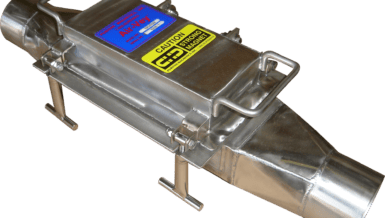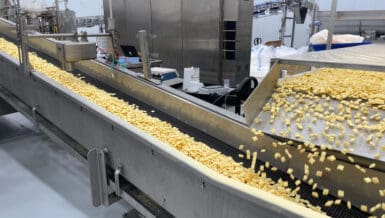




In a labor market where shortages are commonplace, but artificial intelligence cannot entirely replace human oversight, finding an automation solution is crucial to ensure production remains efficient and workers aren’t burdened with tedious, time-consuming tasks.
Level sensing and weight measurement technologies keep inventory on track without manual data collection from bins, tanks, silos, or other storage or processing vessels. Plant employees can rely on reliable, real-time data, as opposed to spreadsheets or verbal reports that enable misinterpretation and human error.
BinMaster sensors and software work together to meet food and beverage manufacturers’ inventory management needs, all in one synergistic, centralized solution.
Bin Weighing for Better Bulk Solids Management
Load cell-based inventory management is a cost-effective method of measurement, considering the total cost per bin rather than per sensor.
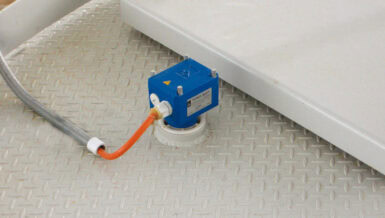
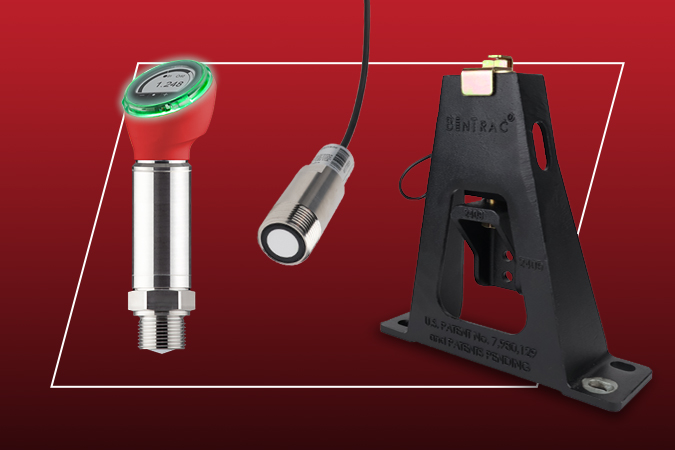
At the core of the BinTrac® system are patented A-Frame load cells with versatile bracket adapters to fit “W” style, angle iron, round, or tube-legged bins. Sensor selection for load cells is based upon the number of legs and the bin’s total weight capacity, with pancake-style load cells also available for heavy, high-capacity vessels.
BinTrac’s A-Frame load cells are easily installed on new or retrofit bins, tanks, and silos with a few turns of the integrated lifting bolt—no cranes or heavy machinery necessary.
Once the full weight of the bin is transferred onto the weight sensors, operators configure their BinTrac indicator to specify bin dimensions, and in retrofit applications, set a “zero” weight for ease of taring.
Non-Contact Level Sensors for Sanitary Environments
Level sensors provide additional advantages to food and beverage manufacturing. In itself, non-contact measurement benefits sanitary operations where contact with bulk materials may compromise quality and interfere with compliance regulations.
Unlike weight-based measurement, non-contact radars and ultrasonic sensors use 80 GHz and ultrasonic signals, respectively, to continuously measure and automatically record level readings.
BinMaster’s CNCR-400 compact radar was engineered with these concerns in mind to meet 3A, FDA, and EHEDG requirements. Sensors with stainless-steel housings and a color-changing light ring option offer hands-off status indication. A maximum range of 49 ft. (17 m) ensures its use in storage vessels and small tanks alike.
ToughSonic® ultrasonic sensors deliver accuracy and convenience to the production floor, with short-to-mid-range options for monitoring all types of liquids and slurries in water tanks, mixers with agitators, wet hoppers, and conveyors. Ruggedized electronics and reliable stainless-steel housings ensure long-term, low-maintenance operation.
Integration Options for Inventory Data
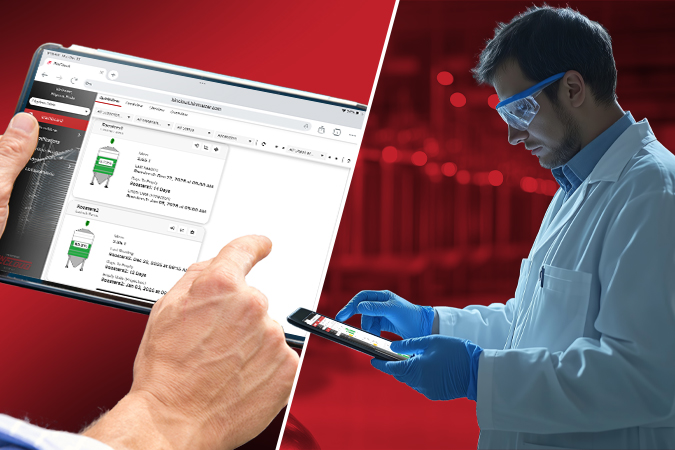
All three technologies—bin weighing systems, radars, and ultrasonics—offer versatile options for data integration. Whether a manufacturer consists of a single plant location or spans several worksites, all information is centralized for ease of interpretation and decision making.
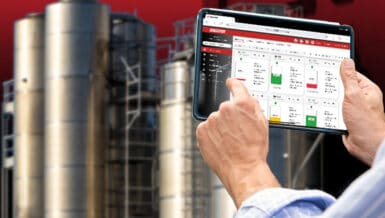
Multi-national operations prefer BinCloud® remote monitoring software to simplify visibility across locations. BinCloud offers:
- Access to bin-specific or multi-site data from a phone, tablet, or desktop PC
- Automated text and/or email alerts, configured to deliver to production or procurement staff and enable immediate action when critical levels are reached within a vessel
- Historical data for reporting purposes, trend identification, and end-of-month or -year planning
- Vendor-Managed Inventory capabilities for streamlined communication with suppliers, who become partners in timely fulfillment—as opposed to customers placing orders themselves
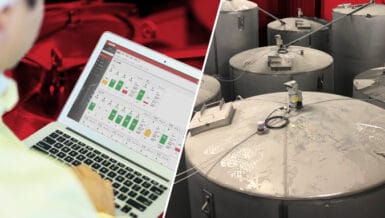
Where supervisors prefer local control—or for isolated sites or those with stringent IT security policies—Binventory® 2.0 delivers an effective on-premise software solution.
- Locally hosted on a company’s LAN, WAN, or VPN; data is stored in a secure Microsoft SQL Server
- Browser application can be accessed from any authorized workstation, including mobile devices
- Includes BinCloud’s SiteView dashboards and alert functionalities
Additionally, each sensor—used on its own or in tandem with another technology—offers options for seamless integration into plant controls.
- HouseLINK™ interfaces allow data communications between bin weighing modules and control systems, via nearly any industrial protocol
- CNCR-400 radars include an integrated IO-Link for easy point-to-point communications
- ToughSonics can be ordered with RS-485 or RS-232 outputs—with analog and serial or serial-only options—to best assimilate with existing automation equipment, such as pump controls
Ingredients Found in Food Processing
A wide range of raw and processed ingredients are used during manufacturing. Due to their varying properties, there is no sensor that can measure them all with optimal accuracy and frequency—which is why a variety of indicator technologies may be beneficial.
For example, while BinTrac load cells deliver superior accuracy in dry grains, they may not be optimal for measuring fats, slurries, or liquid ingredients.
Common food-grade materials measured by weight or level sensors include:
- Oils: Both those utilized in formulations and post-production storage of fats or byproducts from meat processing
- Proteins: Plant- and animal-based, including whey and soy proteins
- Flours: From standard milled powders to premium blends for specialized formulas
- Sweeteners: Granulated sugar, corn syrup, and liquid sweeteners
- Food Colorings: Organic and/or artificial powders, pastes, and fruit juices
- Additives: Thickening agents, preservative acids and salts, and additional flavorings
Where Each Technology Thrives
BinTrac systems are designed for precision measurement of raw bulk solid materials, such as free-flowing granules. The module is often installed on outdoor storage vessels containing bulk commodities for transfer into the plant, including grains, wheat, and corn. S-Style load cells are also available for hopper weighing.
Load cells prove exceptional in bins where irregular material settling or compaction may occur. Bin weight is measured without interference from rat-holing, sidewall buildup, or an uneven material surface.
Radar sensors can monitor the level of all kinds of materials—from sticky slurries to dry bulk solids and viscous oils. Alternately, ultrasonics are best utilized in liquid level and proximity detection applications. ToughSonic-200 transmitters with PVDF housings are ideal for level monitoring in corrosive environments, including in tanks or intermediate bulk containers (IBCs) storing harsh clean-in-place chemicals and disinfectants.
80 GHz radars thrive in bins and silos with dust, condensation, or buildup on the sensor face, while ToughSonics are well suited for use in tanks with foam or turbulence. Ultrasonics’ built-in temperature compensation is appropriate for minimal fluctuations, though compact radars can adapt for larger temperature and pressure swings.
Ultimately, weight, radar, or ultrasonic technologies can be used together or separately across a processing plant. This may include weight and level measurement in the same silo for redundancy, or in separate containers, while all real-time readings are integrated into the same inventory monitoring dashboard.
Your Trusted Source for Food & Beverage Inventory Management
As skilled labor gaps grow and AI learning models continuously fall short of their human counterparts, automated level sensors help optimize labor, eliminate guesswork, and drive efficiency—all without sacrificing product consistency or quality.
Where repeatable, accurate inventory measurement is required for fast-paced food and beverage manufacturing applications, processors can trust BinMaster for reliable sensors, accessible software, and renowned, U.S.-based customer service.