


Particularly in the case of large storage areas and heterogeneous material properties, estimates frequently lead to deviations that directly impact operational processes.
Impact of Inaccurate Inventory Data on Operational Processes
Bulk materials are characterized by their dynamic storage form. Stockpiles continuously change their geometry, for example through extraction, deposition or external influences such as weather conditions. At the same time, material densities and properties vary.
Under these conditions, exact volumetric measurement is only possible to a limited extent without suitable measurement technology.
The resulting uncertainties affect several areas:
- Production and supply planning: A lack of transparency can lead to under- or overstocking
- Logistics processes: Transport and handling processes are based on inaccurate assumptions
- Accounting: Differences between recorded and actual quantities affect business performance indicators
- Operational safety: Risks, for example from unstable storage structures or self-igniting materials, are more difficult to assess
Even small percentage deviations can have significant impacts at large material volumes.
Digitalization and Data Quality
In the course of industrial digitalization, systems for planning, control and analysis are increasingly being used. Enterprise Resource Planning systems (ERP), warehouse management systems and data-based analyses are established in many companies.
However, the quality of these systems depends directly on the underlying data basis. Inaccurate input data inevitably leads to limited validity in further processing.
Against this background, the precise and reproducible recording of physical inventories is gaining importance.
Technological Approaches to Volume Determination
A variety of measurement methods are now used for recording bulk materials, enabling a significant improvement over classical approaches. These include in particular:
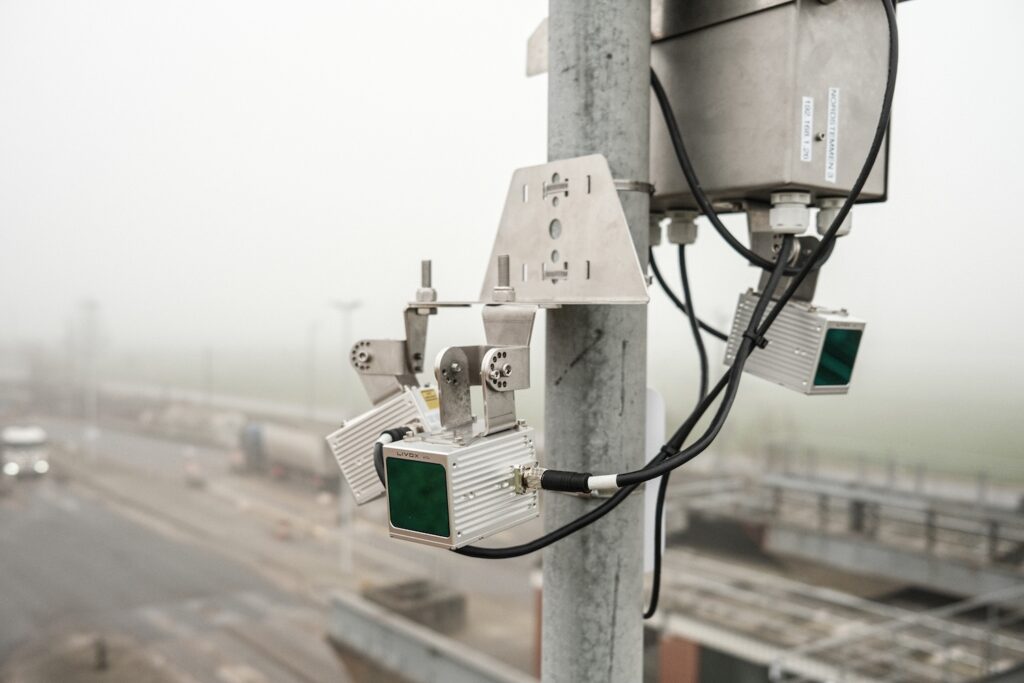
- LiDAR-based measurement systems for high-resolution distance measurement
- Drone-based surveying for flexible, large-area data acquisition
- Stationary 3D scanning systems for continuous monitoring of storage areas
These methods generate three-dimensional point clouds or models from which volumes can be calculated precisely. The acquisition is independent of the specific shape of the stockpiles and can also be performed in areas that are difficult to access.
A further advantage lies in the ability to repeat measurements at regular intervals and thus systematically record changes over time.
Integration into Operational Processes
Pure data acquisition represents only one part of the overall process. Operational benefit arises only through integration into existing systems and workflows.
Typical fields of application include:
- Regular inventory updates based on automated measurements
- Reconciliation of target and actual data in planning and control systems
- Early detection of deviations in inventory and material flows
- Optimization of transport and handling processes
Thanks to the improved data situation, decisions can be made on a more informed basis, and processes can be managed in a more targeted manner.

Practical Observations from Industrial Applications
In practice, it is evident that companies particularly benefit from increased transparency after introducing digital measurement methods. In one case, involving several storage areas, monthly manual inventory counts had previously been carried out. The values determined in this way sometimes deviate significantly from the actual quantities. After switching to regular, digital volume measurement, the following effects, among others, could be observed:
- Reduction of inventory deviations
- Improvement of planning accuracy
- More efficient use of existing storage capacities
- Better traceability of material movements
It is striking that optimization potentials often only become visible once reliable data is available.
Aspects of Occupational Safety and Sustainability
In addition to economic considerations, safety-related and ecological aspects are also gaining importance. An insufficient data basis can mean that potential risks are not identified at an early stage.
Digital measurement systems enable continuous observation of storage conditions and thus support the assessment of safety-relevant developments.
Furthermore, more precise planning helps to optimize transport routes and use resources more efficiently. This can bring both economic and ecological benefits.
Classification and Outlook
The demands for transparency and efficiency in bulk material logistics are continuously increasing. At the same time, companies are under pressure to digitalize processes and manage them on a data-driven basis.
Against this background, the precise recording of inventory levels is gaining increasing importance. While estimation methods represented a practicable solution in the past, modern measurement techniques today offer the ability to generate reliable and reproducible data.
The transition from estimation to measurement is therefore not a purely technological step, but forms an essential foundation for the further development of operational processes.