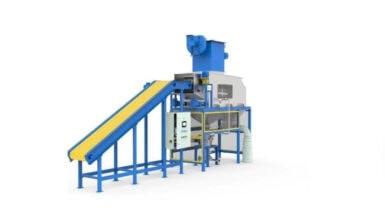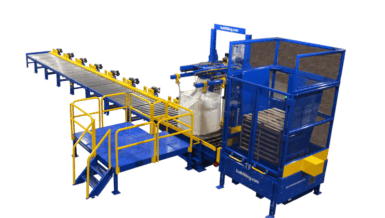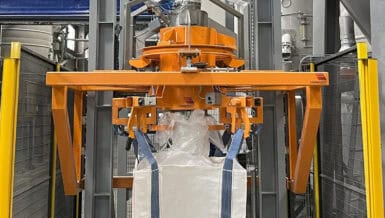



While manual systems offer lower upfront costs, automation can dramatically improve throughput, accuracy, and long-term profitability.
In this guide, we’ll break down the differences and help you determine which option delivers the best return on investment (ROI) for your operation.
Understanding The Three System Types
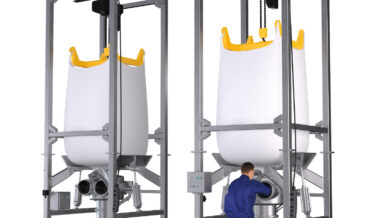
Manual Bulk Bag Filling Systems
Manual systems rely heavily on operators to:
- Position bags
- Attach fill spouts
- Monitor fill levels
- Remove filled bags
Best for:
- Low production volumes
- Pilot lines
- Operations with low labor costs
Semi-Automatic Bulk Bag Filling
These systems automate key steps like:
- Weighing
- Material feeding
- Bag clamping
Operators still assist with bag placement and removal.
Best for:
- Mid-sized operations
- Growing production needs
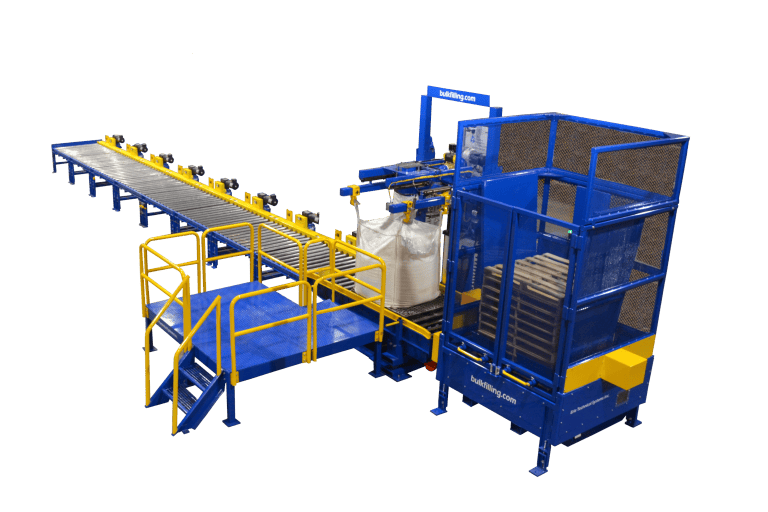
Automatic Bulk Bag Filling Systems
Fully automated systems handle:
- Bag positioning and release
- Filling cycles
- Integration with conveyors and controls
Best for:
- High-volume production
- Continuous manufacturing environments
Throughput Comparison
Production capacity is often the biggest differentiator.
System Type & Typical Output
- Manual: 5–10 bags/hour
- Semi-Automatic: 10–40 bags/hour
- Automatic: 40–60+ bags/hour
👉 For operations experiencing growth, manual systems can quickly become a bottleneck.
Labor Requirements For Manual Or Automatic Bulk Bag Filling
Manual Systems
- Typically require 1–2 operators per shift
- High dependency on labor availability
Semi-Automatic Systems
- Reduce manual handling
- Often require 1 operator
Automatic Systems
- Minimal operator involvement
- Can run with one operator overseeing multiple machines
👉 With rising labor costs, automation offers significant savings over time.
Automatic Bulk Bag Filling Cost Vs Roi
Initial Investment
Manual vs Automatic bulk bag filler ROI
System Type & Typical Cost Range
- Manual: $5K – $25K
- Semi-Auto: $25K – $80K
- Automatic: $80K – $300K+
Long-Term ROI Drivers
1. Labor Savings
Reducing headcount or reallocating labor to higher-value tasks can generate:
👉 $30,000–$70,000+ annual savings
An online ROI calculator can assist in evaluating the return on additional features of a bulk bag filler versus the labor savings over time.
2. Increased Throughput
Automation allows you to:
- Meet higher demand
- Reduce backlog
- Improve delivery times
3. Reduced Product Giveaway
Improved weighing accuracy means:
- Less overfilling
- Better margin control
Example:
- 1% overfill on 2,000 lb bag = 20 lbs lost
- Across production → significant cost leakage
4. Reduced Downtime
Automated systems:
- Reduce operator error
- Maintain consistent cycle times
- Improve uptime
When Manual Systems Make Sense
Manual systems are still the right choice when:
- Production volumes are low
- Budgets are limited
- Flexibility is more important than speed
- Automation ROI is not yet justified
When It’s Time To Automate
You should strongly consider automation if:
- You can’t keep up with demand
- Labor costs are increasing
- You need better accuracy
- Dust or safety concerns are rising
- You’re planning for growth
Hidden Costs Of Staying Manual
Sticking with manual systems too long can lead to:
- Higher labor costs
- Missed production opportunities
- Inconsistent product quality
- Increased operator fatigue and safety risks
👉 These costs often outweigh the initial savings.
Hybrid Approach: Scaling Over Time
Many manufacturers transition in stages:
- Start with semi-automation
- Add automated feeding systems
- Upgrade to full automation as demand grows
This approach helps balance:
- Capital investment
- Operational improvement
Choosing The Right Path For An Automatic Bulk Bag Filler
The best solution depends on:
- Material type
- Required throughput
- Labor availability
- Long-term growth plans
A properly engineered system should scale with your operation—not limit it.
Final Thoughts
Manual bulk bag filling systems can meet basic needs, but automation delivers clear advantages in:
- Throughput
- Cost control
- Safety
- Consistency
For many manufacturers, upgrading to an automated system provides a fast and measurable ROI.
At http://BulkFilling.com , we help companies evaluate:
- Current process efficiency
- ROI of automation
- System designs tailored to their material and production goals
For more information on bulk filling equipment, check out The Ultimate Guide to Bulk Bag Filling (FIBC / Super Sack Filling)