


Reagents such as hydrated lime, sodium bicarbonate and activated carbon all present their own handling challenges. Understanding how material properties, equipment selection and environmental conditions interact throughout this journey can help operators improve reliability, reduce maintenance requirements and support stable operation.
Understanding Reagent Characteristics
Powdered reagents used in flue gas treatment can behave very differently during storage, discharge and dosing. Factors such as bulk density, particle size, flowability, cohesiveness, and moisture sensitivity all influence handling performance.
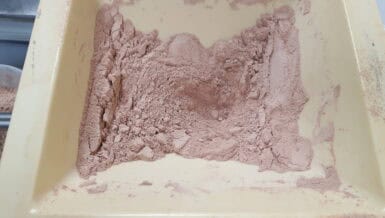
A handling system that performs effectively with one reagent may not necessarily deliver the same results with another. This is one reason why a one-size-fits-all approach can create operational challenges, particularly where materials exhibit poor flow characteristics or are sensitive to environmental conditions. For example, highly cohesive powders may be more susceptible to bridging and inconsistent discharge, while compressible materials can behave differently under varying feeder loads. In flue gas treatment applications, hydrated lime can present particular handling challenges if moisture affects its flow properties, increasing the likelihood of inconsistent discharge and variable feed rates.
These differences often require handling systems to be tailored to the material being processed. For this reason, hopper and feeder configurations are typically selected according to material behaviour rather than adopting a standardised approach. Trantec Solids Handling applies this principle by designing reagent handling systems around the handling characteristics of the powder and the requirements of the application.
Selecting the Right Handling Equipment
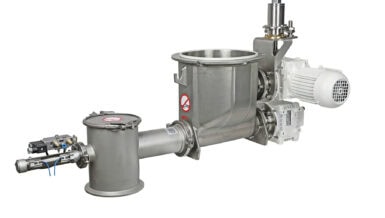
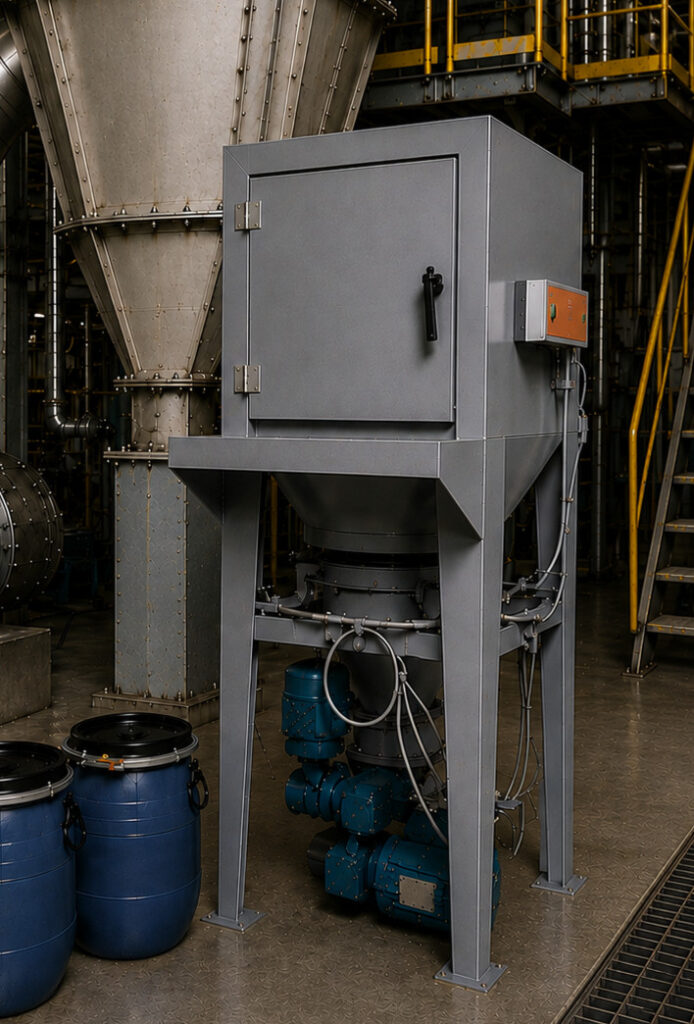
Once powder behaviour has been established, attention turns to selecting hopper and feeder arrangements that can deliver reliable discharge and controlled dosing throughout the handling process. Depending on the application, this may include mass-flow or agitated hoppers together with bevelled, variable-pitch, twin-start or other application-specific auger designs. For example, agitated hoppers can assist with the discharge of cohesive powders by reducing the likelihood of bridging, while twin-start augers may be used where greater dosing precision and feed consistency are required. These approaches can be particularly beneficial when handling difficult-flow powders or in applications where stable dosing performance is required.
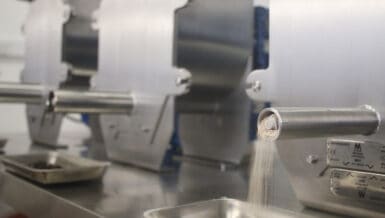
Appropriate equipment alone does not guarantee reliable performance. Consistent dosing depends not only on feeder accuracy, but also on how material is discharged from the storage vessel above. Even a highly accurate feeder can struggle to maintain a consistent output if material is not discharged uniformly. Variations in material discharge can cause fluctuations in screw fill levels, affecting dosing consistency and feeder operation. In extreme cases, inconsistent discharge can cause periods of screw starvation followed by overfilling, making accurate metering more difficult to achieve.
Managing Storage and Environmental Conditions
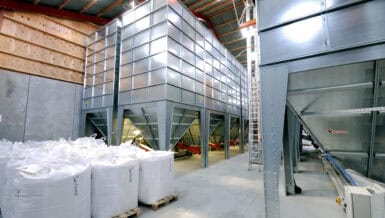
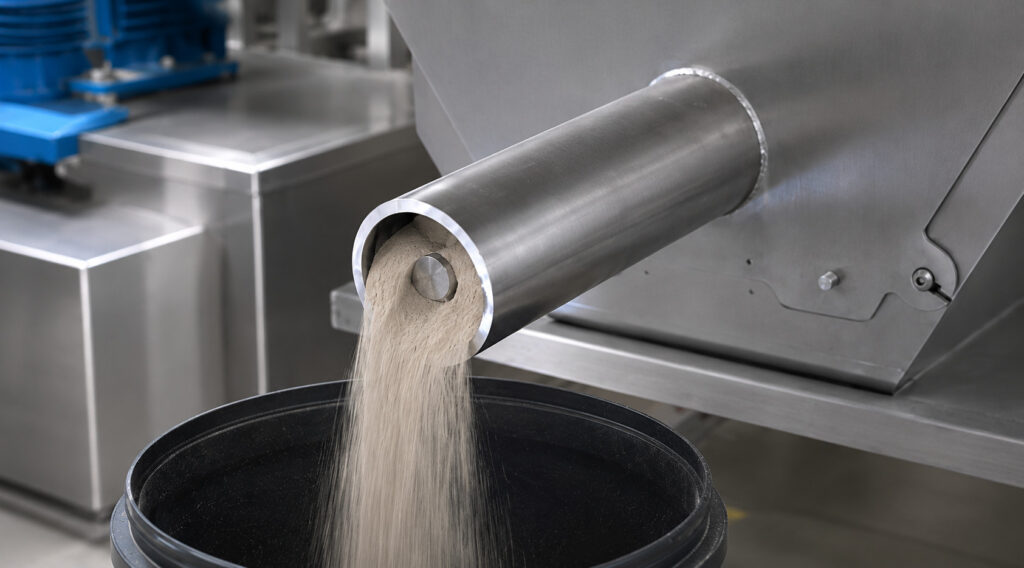
Many powdered reagents are moisture-sensitive, which can alter their flow characteristics and increase the likelihood of caking, lump formation and discharge problems. As material flow becomes less predictable, achieving consistent dosing can become more difficult. Dust generation can create additional housekeeping and maintenance challenges, while uncontrolled storage conditions may further affect material quality and handling performance.
Considering environmental conditions alongside equipment selection helps maintain material quality throughout the handling process. However, reagent handling systems are often given less attention than the primary treatment technology during system design, despite their influence on dosing performance, operator intervention and overall process stability.
Achieving Consistent Reagent Delivery
Poor reagent handling can increase consumption, reduce process efficiency and contribute to unplanned downtime. Operators may also spend additional time clearing blockages, cleaning equipment and making process adjustments.
Reliable reagent handling begins with understanding how powders behave throughout the process. Consistent dosing is not determined by feeder performance alone, but by the interaction between material properties, storage conditions and equipment design. This approach guides the design of reagent handling systems for demanding powder applications, including those developed by Trantec Solids Handling.
Further Information
Guidance on reagent handling, powder dosing and feeder selection for flue gas treatment applications is available from Trantec Solids Handling.
Visit www.trantec.net or contact the team at sales@trantec.net.