


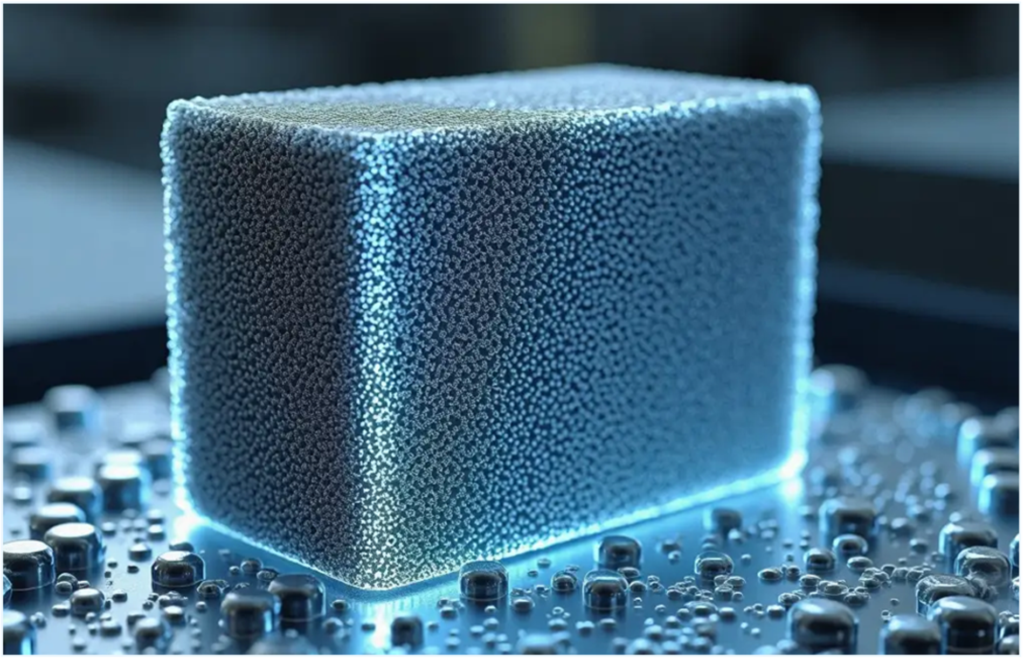
Whether it is the sulfide, oxide, or polymer route, powder processing technology has taken center stage.
1. – Industrialization Wave
In the past year, the industrialization of solid-state electrolyte has accelerated significantly. Multiple pilot lines have been completed and put into operation, and some materials have entered the ton-level or even thousand-ton-level mass production validation stage. It’s generally expected that 2026-2027 will be a critical window for small-volume mass production of all-solid-state batteries.
In this process, solid-state electrolyte powder processing has shifted from a “supporting role” to a “leading role.” Unlike conventional powder materials, solid-state electrolytes feature high specific surface area, easy moisture absorption, and extreme sensitivity to impurities. Traditional powder processing equipment cannot directly meet their process requirements.
2. – Technical Challenges
The technical challenges currently widely discussed in the industry are concentrated in three areas:
Moisture and Atmosphere Control
Taking sulfide electrolytes as an example, their reaction with water vapor generates harmful gases and damages the material structure. Therefore, from raw material synthesis, conveying, and mixing to finished product packaging, the entire process must be carried out under an inert atmosphere with a low dew point (≤-40°C). This imposes new requirements on the sealing performance, airtightness, and gas replacement capability of powder processing equipment.
High-precision Processing of Ultrafine Powders
Solid-state electrolytes typically need to be ground to the submicron or even nanometer scale to shorten ion transport pathways. However, ultrafine powders are prone to agglomeration and exhibit poor flowability, leading to metering deviations and uneven mixing during weighing, batching, and mixing steps. Achieving high-precision batching within ±0.2% and highly uniform mixing has become a “must-answer question” for process validation.
Equipment Material and Anti-corrosion Design
Certain electrolytes release corrosive by-products during preparation or use, causing damage to equipment inner walls, seals, and valves. The selection of corrosion-resistant materials and the design of easy-to-clean structures directly determine the stable operating life of the production line.
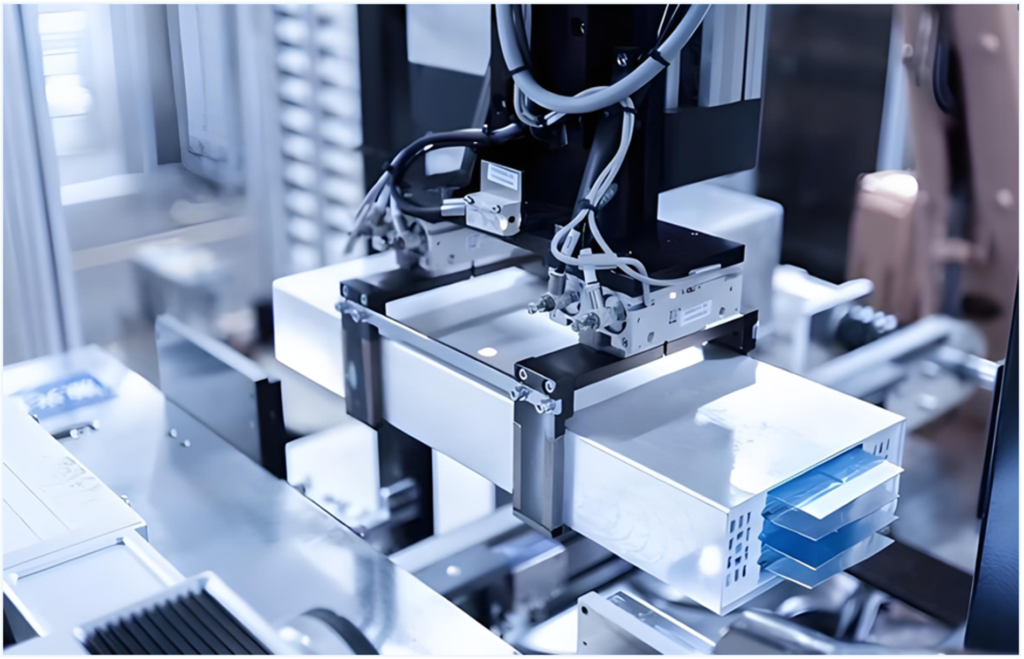
3. – Rise of Dry Process
Under the new paradigm of all-solid-state batteries moving toward industrialization, the dry electrode process is rapidly replacing the traditional wet route. Compared with the conventional wet process, the dry method eliminates the need for toxic solvents such as N-methyl-2-pyrrolidone (NMP), removes the need for expensive solvent recycling and drying equipment, and significantly reduces energy consumption and floor space costs. At the same time, it completely avoids issues such as electrode cracking caused by solvent evaporation and the floating and stratification of binders and conductive agents, markedly improving electrode uniformity and structural stability.
In the dry process, polytetrafluoroethylene (PTFE) is currently the most widely used fibrillizable binder. Its fibrillation mechanism is as follows: under external shear forces, the primary agglomerate structure of PTFE particles slides along the direction of the molecular chains, transforming from a granular form into linear nanofibers with a high aspect ratio, which then form a three-dimensional network structure that tightly wraps around the active material and conductive additives.
This fibrillation behavior directly determines the mechanical strength, conductive network integrity, and electrochemical performance of the dry electrode. Therefore, mastering a high-precision, continuously stable fibrillation process has become a core bottleneck that must be overcome to scale up from material R&D to mass production. Currently, there are three mainstream fibrillation technology routes:
Jet Milling Method
High-speed airflow is used to impact and shear the material. The equipment must be equipped with a fine classification system to achieve controllable construction of the PTFE fiber network by adjusting parameters such as airflow velocity and pressure. Its advantages include high fibrillation efficiency and controllable temperature rise, but it imposes extremely high requirements on the dispersion uniformity of micron- and even nano-scale ultrafine powders.
Twin-screw Extrusion Fibrillation
Precise shear is achieved through a special screw configuration featuring high torque and low shear, making this the primary route for moving the dry electrode toward continuous, high-volume production. However, given the tendency of sulfides to agglomerate and absorb moisture, further optimization is still needed in terms of sealing performance, atmosphere protection, corrosion-resistant material, and ease of cleaning to meet the large-scale dust-free production demands of solid-state electrolytes.
High-intensity Mixing/ High-shear Integrated Fibrillation
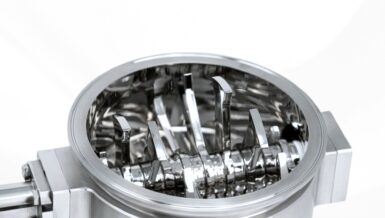
The integrated mixing and homogenizing machine combines material mixing, homogenization, and fibrillation in one unit, meeting the stringent requirements of solid-state batteries for high uniformity and the handling of easily agglomerated materials. This places extremely high demands on equipment structural design and power control.
4. – Technology Preparation
Facing the technological leap brought by solid-state electrolytes, equipment manufacturers cannot merely act as “hardware integrators.” Instead, they need to establish a forward R&D capability integrating “materials-processes-equipment.” In this direction, SOPHON continues to invest:
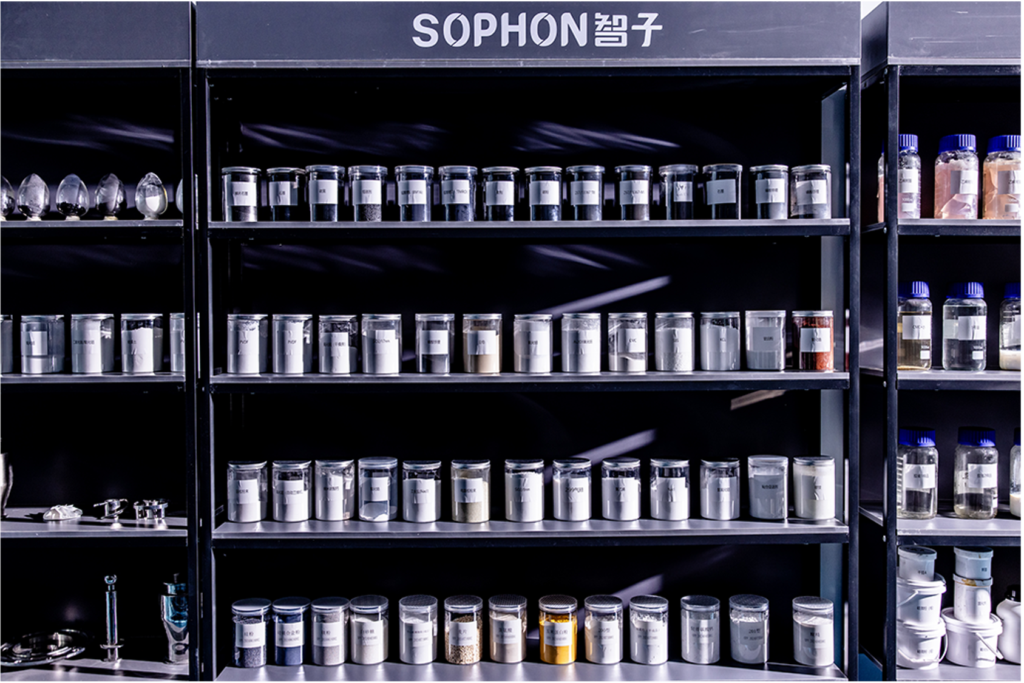
Z-Source Laboratory
A physical property database covering hundreds of powder materials (including various electrolyte precursors) has been established, enabling the company to provide customers with process validation support from laboratory-scale trials to pilot-scale scale-up, significantly shortening the trial-and-error cycle of “material scale-up.”
High-precision Weighing
Metering accuracy can reach as high as ±0.01%, with support for flexible batching of various ultrafine powders; the mixing equipment features fluidization structure optimization specifically designed for easily agglomerated powders, ensuring batch-to-batch consistency.
Digital Twin System
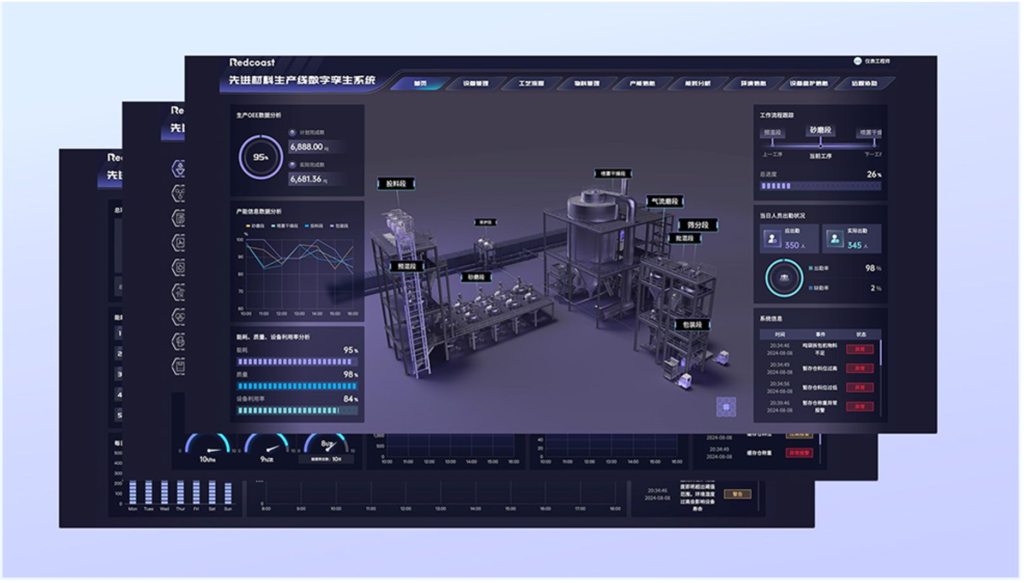
Through digital twin technology, full-process digital management from PID design and 3D visual monitoring to predictive maintenance is achieved, helping customers quickly establish data connectivity from pilot lines to mass production lines.
The industrialization of solid-state electrolytes is, in essence, a critical battle requiring deep integration of materials science and equipment engineering. SOPHON will continue to delve into powder processing technology, helping industry partners smoothly enter the fast lane of solid-state battery mass production.