


Think about medication, for example. Because facilities that manufacture medication are regulated by the FDA, every gram of product has to be accounted for, even the dust (and there’s a lot of it).
The active pharmaceutical ingredients (APIs) manufactured and handled in these facilities are often extremely fine powders that flow like water. As APIs move through manufacturing areas, they create dust that must be managed by a dust collection system. A core part of many dust collection systems are fabric-based filters like baghouses and cartridge collectors, designed to capture dust particles and achieve high filtration efficiency by developing a dust layer across the filter’s surface. The surface layer of dust on these filters helps trap smaller particles while still allowing airflow to pass through, but the amount and size of the dust can still create filtration issues like clogging and filter damage that affect the rest of the dust collecting system.
Oversight happens because it seems easier to invest in filter replacement, expecting high efficiency and adequate filter life without evaluating other factors. Unfortunately, relying solely on fabric filtration can mask issues like:
- Increasing pressure drops or changes
- Frequent filter cleaning cycles and/or replacement due to premature wear
- Dust bypass issues
- Uneven dust buildup
- Rising maintenance costs
- Reduced collection efficiency
- System overloading
Additionally, conventional filtration methods like these can create potential contamination risks, delaying production—again, every particle of dust has to be safely accounted for in a pharmaceutical facility.
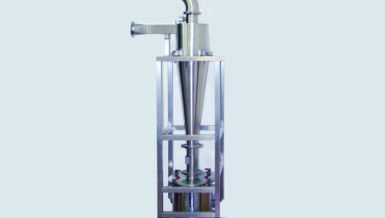
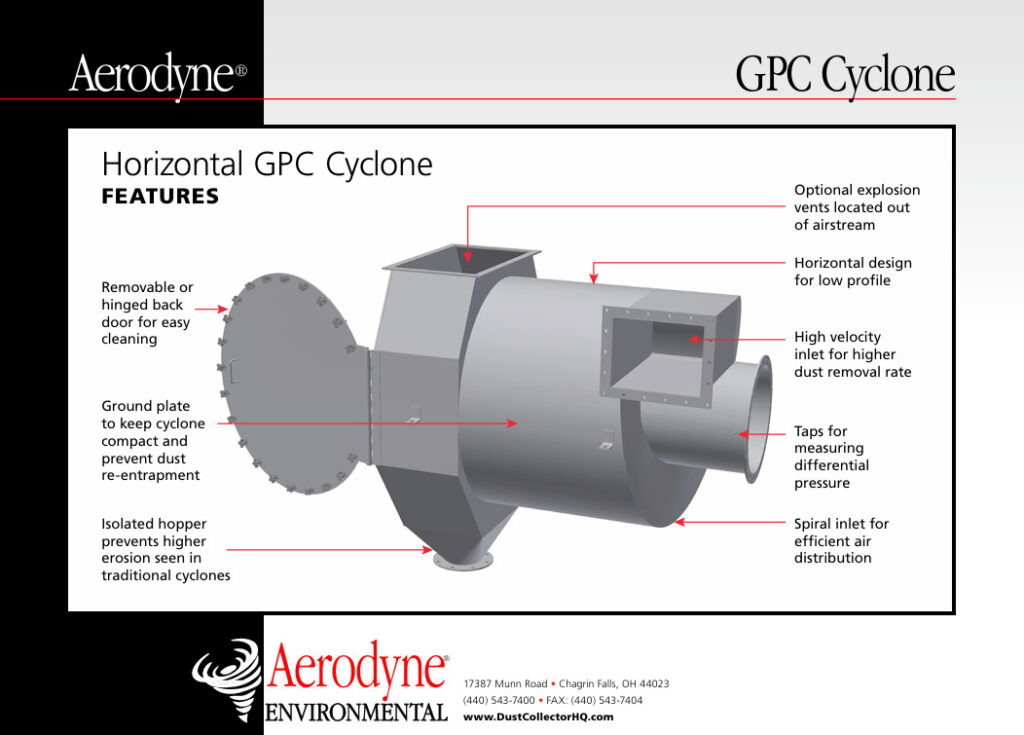
A cyclone prefilter, however, can ease particle loading on the entire system and collect 90% or more of dust before it hits fabric filters downstream. Aerodyne’s GPC (Ground Plate Cyclone), is a strong example. This cyclone comes in seven sizes under 8ft3 and its compact size—about 50% smaller than a standard cyclone– allows for installation in compact areas where a traditional cyclone would be too large to fit. Constructed of stainless steel (or other metals depending on application), the GPC has a Ground Plate used to accelerate centrifugal force in diverting dust toward the cyclone’s walls and hopper while clean air exits. This design enhances product reclamation (dust capturing) efficiency, meaning that valuable material previously lost to filters can be retained more effectively.
Unlike a traditional cyclone, which requires a long, sloped wall to concentrate dust near the hopper and often creates the vortex reversal phenomenon, the GPC’s Ground Plate isolates the cyclonic chamber from the hopper and prevents any dust re-entrainment. This is critical to prevent contamination and possible delays in pharmaceutical manufacturing.
Because the GPC cyclone is designed to collect fine, low-density particles in applications like API production, it is a logical solution to the problems of filter overloading and product reclamation. There is a direct correlation between the efficiency of material reclamation and cost savings, particularly in industries like pharmaceutical manufacturing where process materials are expensive and even small amounts of waste or lost product add up quickly. Cyclonic dust collectors also have no moving internal parts unlike their fabric filter counterparts, simplifying operation and maintenance requirements. When cleaning and maintenance are required, the GPC has an optional “easy clean” hinged door for quick access to the collector’s interior.
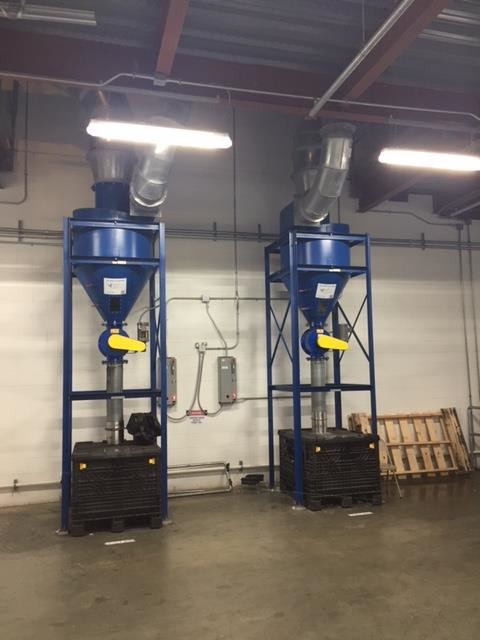
Aerodyne has put through several successful pharmaceutical cyclonic dust collector installations in which facilities are able to utilize the benefits of advanced dust collection technology without significant changes to their operations. In one example, the facility purchased multiple vertically oriented GPCs for their “clean rooms,” which are fitted with a special bag for the bag-in/bag-out process required in pharmaceutical operations to prevent dust loss. Previously, they had struggled with their cartridge collectors becoming clogged during manufacturing processes, resulting in API dust being difficult to account for. The cyclones they purchased were organized in rows, which would filter material, then feed cartridge collectors for final dust collection. Placing the GPCs upstream of the cartridge collectors proved to be a success; typically, filters need to be replaced frequently because they fill up with product quickly, but because dust was initially filtered by the cyclones, the filters experienced less strain and an increased lifetime. Per FDA requirements, API product reclamation became more streamlined as well.
Building a dust collection system that manages dust proactively instead of reactively can look challenging, but it is certainly not impossible with the right technology. Although this article discusses the GPC’s success as a cyclone pre-filter in pharmaceutical applications, Aerodyne has seen the GPC’s success in a variety of other applications across multiple industries.
Some application examples include:
- Point of use dust collection
- Cyclone prefilter (discussed here)
- Product reclamation (discussed here)
- Compact cyclone (discussed here)
- Sanitary/Quick Clean (briefly discussed here)
- Wet Dust
- Explosive Dust
- Tough Dust
Some industry examples include:
- Mining
- Ceramics
- Food
- Chemical Processing
- Abrasives
- Foundry
- Glass
- Metals
- Pharmaceuticals (discussed here)
The right dust collection system is critical to the health and wealth of your operation. Visit our website here to learn more about Aerodyne’s unique approach to dust collection technology, or speak to one of our experienced engineering staff at 440-543-7400 to schedule a free conversation about your application.
Contact us here to start the conversation.