


Many facilities do not immediately recognize when their dust collection system is underperforming. In most cases, the warning signs develop slowly and start as problems that require routine maintenance.
These common symptoms often indicate that a dust collection system is no longer operating as designed for the application:
- Poor dust capture at the source
- High differential pressure across the baghouse or cartridge collector
- Excessive pressure loss
- Reduced airflow at inlet hoods and pickup points throughout the system
- Dust escaping into the facility’s environment or accumulation in new or unexpected quantities
- Frequent filter replacement due to shortened lifespan
- Increased housekeeping requirements & maintenance downtime
- Rising energy & operating costs
Like any other mechanical system, dust collectors require regular maintenance to keep them operating efficiently. Aerodyne Environmental has curated an evaluation process focused on identifying the root causes of reduced airflow, excessive pressure loss, and declining collection efficiency before they become major operational problems.
Why Dust Collection System Performance Declines Over Time
Dust collection systems typically operate continuously in demanding industrial environments. As systems age, filters become loaded and airflow resistance increases.
In many facilities, production processes are modified over time without first reevaluating the dust collection system. New pickup points may be added, and airflow demands or materials processed may change. Small changes like these can affect overall system balance and reduce collection efficiency. Evaluating the dust collection system serves to identify these issues before they become severe enough to affect production efficiency and workplace conditions. Without regular system evaluations, gradual performance losses can create widespread operational problems.
High Differential Pressure Is Often an Early Warning Sign
One of the most common signs of a dust collection problem is high differential pressure across the baghouse or cartridge collector.
Differential pressure measures the resistance to airflow through the collector filters. As dust accumulates on the filters, resistance naturally increases. However, when pressure becomes excessively high, the system can no longer maintain proper airflow.
This often creates a chain reaction throughout the dust collection system.
As airflow decreases:
- Dust capture efficiency drops in cyclone collectors
- Pickup points lose suction
- Dust begins escaping into the facility or building up in ductwork, creating risk for safety hazards and greater maintenance demands
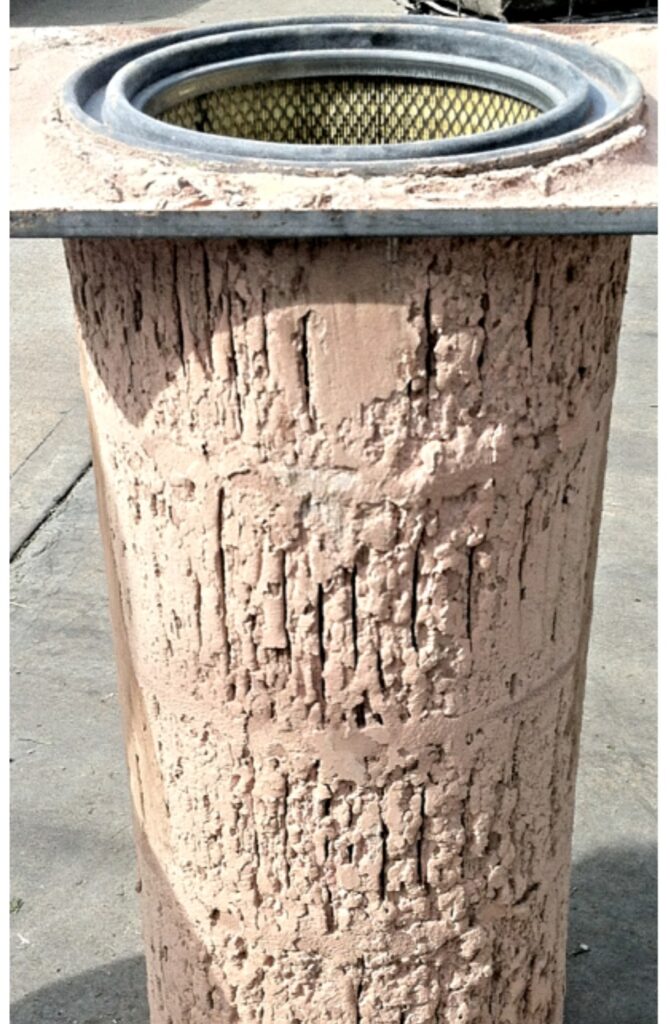
Many facilities initially respond by replacing filters more often, but high differential pressure is frequently caused by system-related issues more complex than filter health.
Common causes may include:
- Inadequate filter selection or cleaning cycles
- Excessive dust loading
- Moisture buildup inside the collector
- Improper airflow balance
- Plugged duct sections
- Hopper discharge problems
Evaluating differential pressure trends helps facilities identify the root causes of airflow restrictions before they create bigger issues.
Aerodyne’s engineers understand that airflow changes can significantly affect dust collector performance, especially when cyclones and filter collectors operate on the same system. Reduced airflow can lower cyclone separation efficiency and increase dust loading on downstream filters, resulting in frequent cleaning cycles and shortened filter life.
Poor Airflow Reduces Dust Capture Efficiency
Maintaining proper airflow at inlet hoods and pickup points is critical for effective dust collection. Even if the collector itself appears operational, insufficient airflow at the source prevents dust from being captured effectively. When capture velocity drops below design conditions, airborne dust can escape before it enters the collection system.
Facilities often notice symptoms like:
- Visible airborne dust near equipment or affecting visibility
- Dust settling throughout the facility
- Increased cleaning requirements
- Reduced worker comfort
Poor airflow can result from several conditions within the system.
In many cases, airflow loss is caused by:
- Dirty or overloaded filters
- Duct restrictions
- Air leaks
- Improper hood design
- Increased static pressure losses
- Fan performance issues
- Improperly balanced airflow
As system resistance increases, fans work harder to move air through the collector and ductwork. Over time, airflow at critical pickup points may drop below the level required for effective dust capture.
Evaluating airflow throughout the system helps determine whether sufficient air volume is reaching each collection point and whether the system is still operating according to its original design conditions.
Aerodyne Environmental emphasizes that proper airflow is one of the most important factors affecting cyclone and dust collector efficiency. Dust collection systems that are routinely evaluated and inspected are more likely to maintain consistent airflow performance and long-term reliability.
Why Evaluating the Entire System Matters
Dust collection problems are rarely isolated to a single component. In many cases, airflow issues, pressure losses, and maintenance problems are interconnected.
Replacing filters may not fix anything if underlying factors like duct restrictions, airflow imbalance, or fan performance issues are also contributing to reduced efficiency.
The Aerodyne Dust Collection System Evaluation Guide focuses on five important areas that work together to affect overall system performance.
1. Airflow Performance
Proper airflow is essential for capturing and transporting dust effectively.
An airflow evaluation helps determine whether the system is delivering sufficient air volume at hoods, pickup points, and throughout the duct network.
Airflow measurements often reveal hidden restrictions or system imbalances that reduce collection efficiency.
2. Differential Pressure Monitoring
Differential pressure is one of the clearest indicators of collector performance; tracking trends over time allows facilities to identify gradual performance losses before severe airflow restrictions occur.
Monitoring pressure loss across the collector helps identify:
- Plugged filters
- Cleaning system failures
- Excessive dust loading
- Airflow restrictions
- Developing maintenance problems
3. Dust Collector Condition
The physical condition of the collector itself directly affects system efficiency because even small leaks or maintenance issues can significantly reduce performance.
Collector inspections may identify:
- Air leaks
- Worn filters
- Dust buildup
- Hopper discharge issues
- Mechanical wear, damaged seals, or corrosion
4. Ductwork Efficiency
Ductwork problems are a common cause of airflow loss and excessive static pressure.
Over time, ducts may develop:
- Dust accumulation
- Abrasion wear or damaged sections
- Leaks
- Improper branch balancing
- Poor transitions
These issues increase airflow resistance and reduce transport efficiency throughout the system.
5. Fan Performance
The fan provides the airflow required to move dust throughout the system, and evaluations help determine whether the system is maintaining the airflow required for proper dust capture. If fan performance declines, the entire system loses efficiency.
Common fan-related issues include:
- Belt slippage
- Mechanical wear
- Incorrect fan speed or vibration problems
- Increased system resistance
How Cyclone Pre-Filters Can Improve System Efficiency
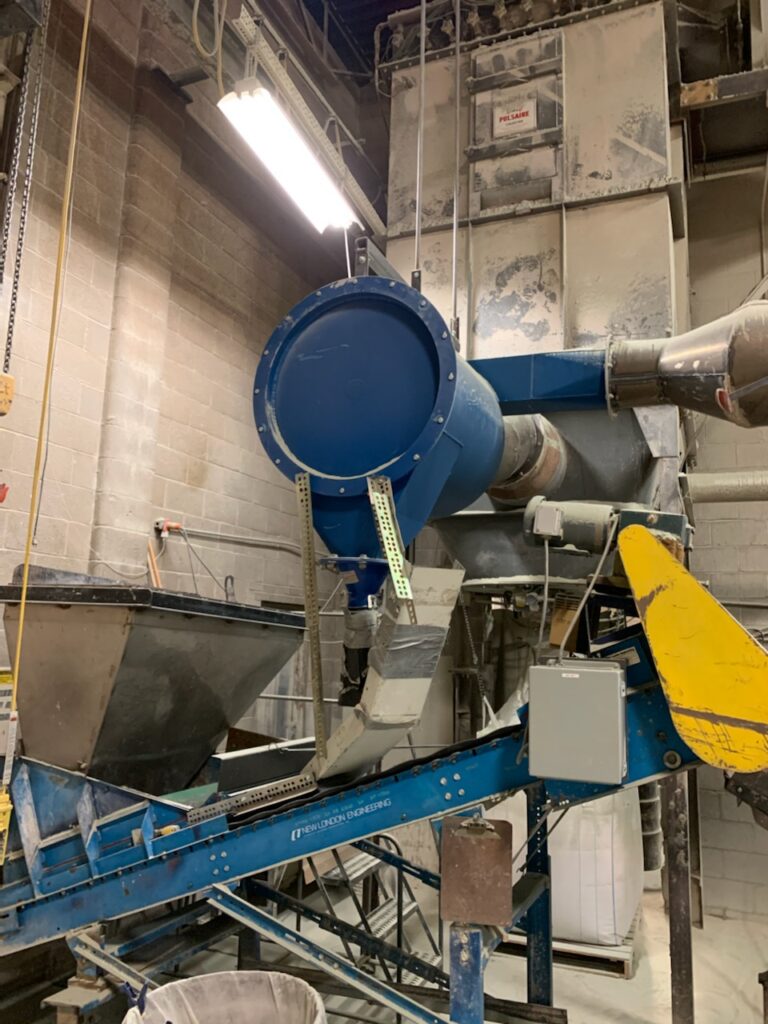
In many applications, adding a cyclone pre-filter ahead of a baghouse or cartridge collector can help reduce dust loading and improve overall system efficiency. Cyclones mechanically remove larger particulates before they reach the final collector, helping reduce wear on filters and extending maintenance intervals. Aerodyne Environmental specializes in these cyclone dust collectors for filter-based systems, which are particularly useful in applications involving high dust loading, abrasive particulate, fibrous materials, or product recovery requirements.
Using a cyclone pre-filter can help facilities:
- Reduce dust loading on filters and extend filter life
- Lower maintenance frequency
- Maintain air pressure
- Improve airflow stability
- Handle abrasive or difficult dust materials more effectively
The Benefits of Regular Dust Collection System Evaluations
Routine system evaluations help facilities identify performance issues before they become major operational problems. By regularly evaluating airflow performance, differential pressure, collector condition, ductwork efficiency, and fan operation, facilities can improve their systems’ reliability and efficiency for the long term.
Regular evaluations can help:
- Improve dust capture efficiency
- Reduce energy consumption
- Extend filter life
- Lower maintenance costs and downtime
- Improve workplace cleanliness
- Maintain consistent airflow performance
- Improve long-term equipment reliability
Structured dust collection system evaluations are a practical method manufacturing facilities can utilize to identify and correct red flags before they lead to expensive and time consuming operational issues.