



“This is a breakthrough for the industry,” said Martin Tukker, Managing Director of JOA Air Solutions. “A heat pump capable of delivering this volume of steam, and so seamlessly integrated into the drying process, sets a new benchmark in the processing industry. We’re proud to have collaborated with PMI, who have shown true leadership by being first movers.”
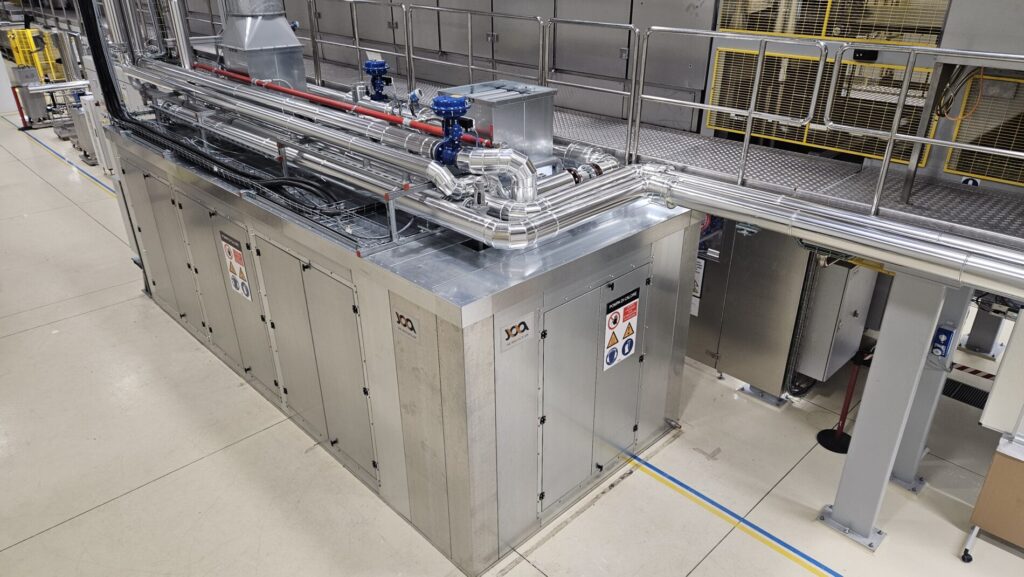
This energy efficient system directly produces steam for industrial drying processes using a high-temperature heat pump. The solution not only recovers energy but also water from the exhaust by integrating direct heat recovery from hot exhaust gases with a two-stage high-temperature heat pump. The result is a tightly engineered system that would be capable of supplying over half of the heat required for PMI’s dryers, entirely from recovered energy.
“This is the type of innovative technology that could support manufacturers from various industries with climate transitions, sustainability goals and lead towards more energy efficiency initiatives,” according to Tukker.

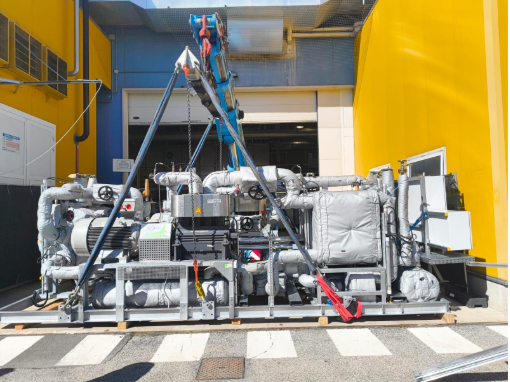
The system upgrades residual heat from 36 degrees Celsius in two stages: First to 80°C, then further to 139°C at 3.5 bar absolute pressure. The created steam is directly used in drying operations, which are typically among the most energy-intensive steps in manufacturing. Despite the unusually large temperature lift, the system maintains high efficiency, achieving a coefficient of performance (CoP) of up to 2.5.
This is a great example of efficiency combined with state of the art engineering to recover energy lost from the dryer and compressing it back in the form of usable energy. This concept can be replicated in many other manufacturing industries to process steam and decarbonize various value chains.
“At PMI we believe in leveraging innovation to address system challenges and seeking solutions through strategic collaboration. This project is a great example of collaboration to deliver on an industry challenge that not only accelerates our path to Net Zero, but also the industry as a whole. Like with every large and innovative project, we had some challenges to overcome,” said Arjun Arya, Manager Environmental Sustainability. “But we knew we were pushing boundaries in the right direction. The results clearly show how much potential there is in applying heat pump technology at this scale to thermally reuse the energy in an efficient manner.”
The heat pump itself is supplied by German Heat Pump Supplier SPH Sustainable Process Heat. They were selected as they are one of only a few in the world capable of reliably operating at such high output temperatures. SPH’s systems are designed specifically for process industries seeking to decarbonize heat without compromising performance.